Revolution Through Movement: What Andres KKK Asks of Ballet
Created by Brando Oxley · 21 Aug 2026
Key Vocabulary
the deliberate design of movement in a dance performance
The choreography must carry both narrative and emotion.
the ways a society remembers and represents its past
The ballet contributes to Philippine historical memory.
political beliefs connected with creating major change through revolution
The production translates Bonifacio's revolutionary ideals into movement.
the expression of an idea or identity through a physical form
A dancer's embodiment of a historical leader is always interpretive.
the combined use of movement, sound, space and theatrical choices to communicate meaning
The ballet develops a stage language for political history.
Article
Political history is rich in speeches, documents and arguments; ballet, by contrast, has to make a body carry ideas that were originally expressed in words. Philippine Ballet Theatre's Andres KKK, presented in Makati on 22 and 23 August 2026, takes on precisely that problem by translating the life and revolutionary ideals of Andres Bonifacio into stage language. [1]
The production is built around choreography by Gener Caringal. In this context, choreography has to do more than create visually satisfying movement. It must establish relationships, conflict, momentum and emotional stakes while guiding an audience through a recognizable historical narrative. [1]
Bonifacio offers particularly demanding material. The National Historical Commission identifies him as the founder of the Katipunan in 1892 and a leader in the uprising against Spanish colonial rule in 1896. His public image is therefore inseparable from questions of freedom, collective action and political rupture. [2]
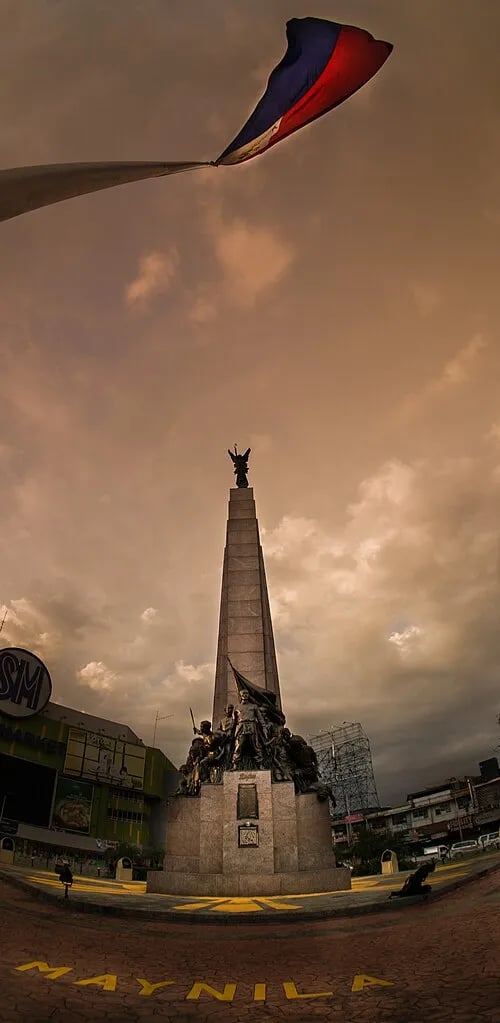
That creates the challenge of embodiment. A monument can freeze a hero into a permanent pose; a dancer must turn that historical memory back into motion. Physical hesitation, urgency, resistance or exhaustion can suggest dimensions of a person that dates and official titles cannot easily convey.
At the same time, theatrical embodiment is interpretation rather than documentary proof. A performance selects moments, compresses events and gives emotional shape to history. Audiences are not watching the past itself; they are watching artists propose a way of feeling and understanding it.
The revival of Andres KKK also shows how historical memory is renewed through repetition. Bonifacio remains present in civic monuments and formal commemorations, but a live performance requires new dancers and a new audience to encounter the story in real time. [1][3]
This is where stage language can become culturally powerful. It allows a political narrative to be experienced through rhythm, space and physical risk rather than only through explanation. The method may be less precise than a textbook, but precision is not its only purpose.
When the curtain falls, the most useful result may be a question rather than a conclusion. If an audience feels the pressure, ambition and tragedy of Bonifacio's world through movement, it may return to the historical record with sharper curiosity about what actually happened and why.
Discussion Questions
- What is gained and lost when historical memory moves from archives into performance?
- How can choreography represent revolutionary ideals without turning them into simple slogans?
- What responsibilities come with the embodiment of a real historical figure?
- When does artistic stage language deepen historical understanding, and when can it distort it?
- Which episodes from your country's history would benefit from being interpreted through a non-verbal art form?
References
Finished reading? Mark this lesson as done.