Astana's Green Belt: Growing an Urban Forest on the Steppe
Created by Brando Oxley · 20 Aug 2026
Key Vocabulary
the process of creating forest on land that was not recently forested
Afforestation around Astana requires careful species selection.
the controlled supply of water to plants or land
Young trees need irrigation during dry periods.
how well something fits the conditions of a particular area
Tree species are chosen for regional suitability.
the process of designing how a city develops and uses land
The green belt is part of long-term urban planning.
to increase gradually over time
The benefits of mature trees accumulate over many years.
Article
Astana was built to project the image of a modern capital, yet one of its most consequential design experiments is biological rather than architectural. Since 1997, the city has been developing a green belt intended to place a substantial zone of trees between the capital and the surrounding Kazakh steppe. [1]
The project's original rationale was climatic as well as recreational. Astana experiences intense winds, harsh winters and relatively dry growing conditions. Official policy describes the belt as a way to moderate unfavorable local conditions while creating space for public recreation. [1]
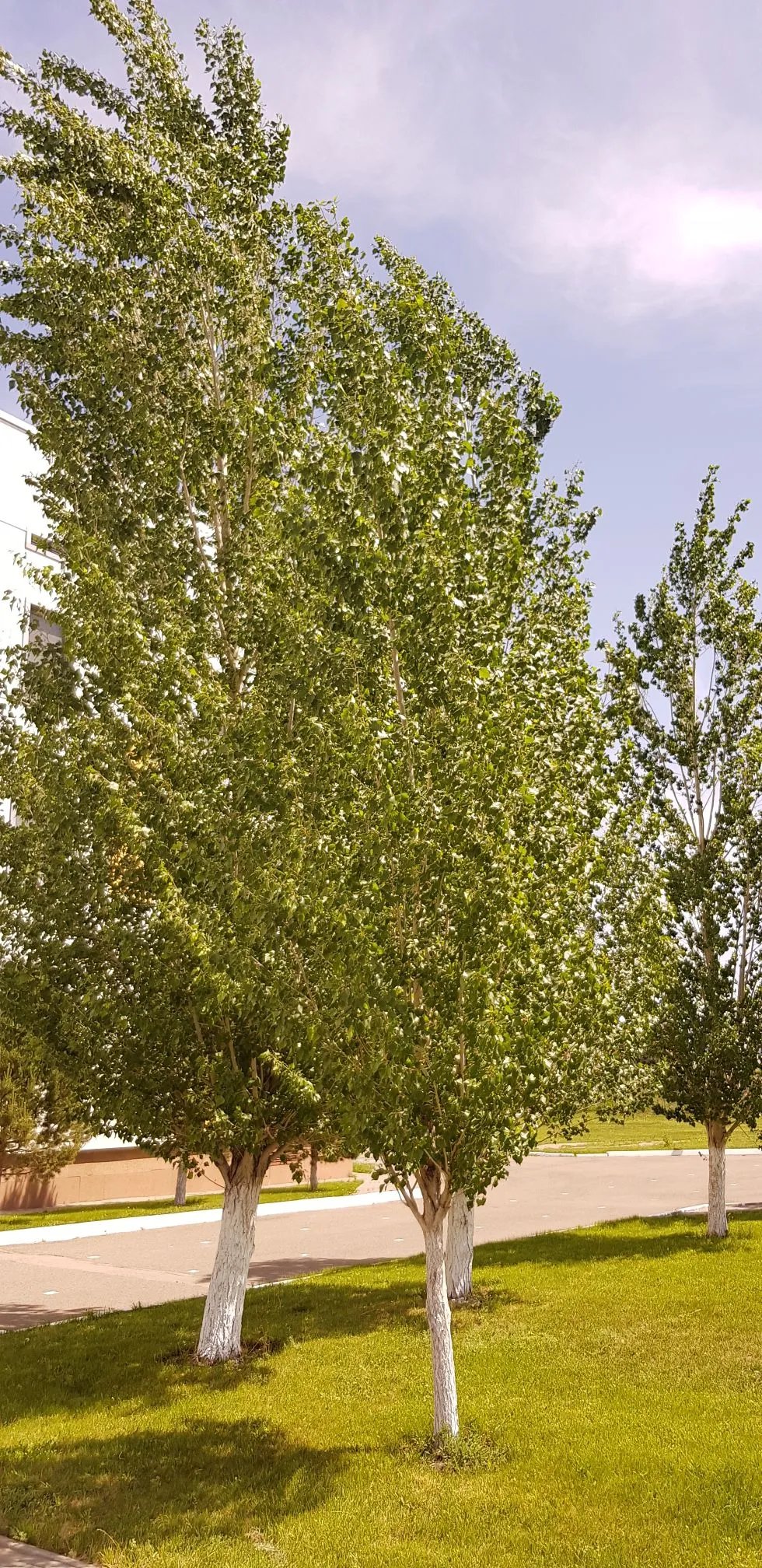
Afforestation in this environment requires persistence. Soil conditions vary, young plantings need irrigation and managers favour species capable of tolerating local extremes. Astana organizations have reported using birch, elm, maple, pine and other hardy trees and shrubs, with planting material selected for regional suitability. [3]
Official figures place the city's green belt above 14,800 hectares. A 2025 environmental update reported roughly 14.4 million green plantings within it and described continued expansion of urban greenery. [1][2] The numbers matter, but survival across repeated winters is more meaningful than the number planted on a single day.
The belt also illustrates a distinctive form of urban planning. Most cities inherit mature landscapes and then try to preserve fragments of them. Astana has attempted the reverse: establishing substantial tree cover around a relatively young capital in a landscape where dense forest is not the natural default.
That makes the green belt a long experiment in patience. Buildings announce completion with an opening ceremony; urban forests never really finish. Their value accumulates quietly through shade, shelter, habitat and the simple fact that each surviving tree makes the next decade look different from the last.
Discussion Questions
- What conditions make afforestation around a city worth attempting?
- How should planners balance irrigation needs with the environmental benefits of new tree cover?
- Why can regional suitability matter more than choosing visually impressive tree species?
- What does Astana's project reveal about the time scale of urban planning?
- Which public benefits accumulate slowly enough that governments may find them difficult to prioritize?
References
- Government of Kazakhstan, "Implementation of local environmental policy in Astana." Source
- Government of Kazakhstan, "Implementation of local environmental policy: Greening." Source
- Astana Social-Entrepreneurial Corporation, "More than 450 thousand seedlings will be planted in the green belt of the capital." Source
Finished reading? Mark this lesson as done.