A Bamboo Specialist With Carnivore Digestion
Created by Brando Oxley · 24 Aug 2026
Key Vocabulary
a situation where inherited biological features appear poorly suited to a current way of life
The panda's bamboo diet and short gut create an evolutionary mismatch.
the length of time material remains within a digestive system
Short retention time limits opportunities for fibre fermentation.
the variety of microorganisms within a biological community
The study found unusually low microbial diversity in pandas.
biological activity involving enzymes that break down cellulose
Cellulase activity increased as pandas ate more bamboo.
living or functioning without oxygen
Some efficient fibre-digesting microbes are anaerobic.
Article
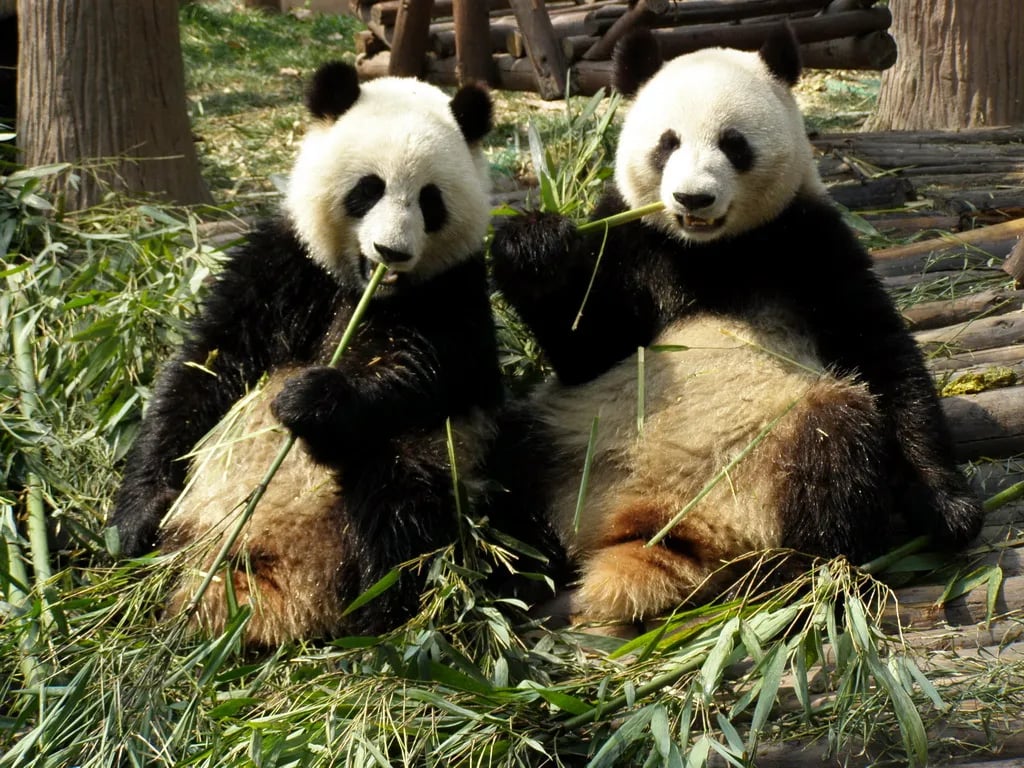
The giant panda presents an evolutionary mismatch that seems almost deliberately inconvenient. Its diet is overwhelmingly bamboo, yet its gastrointestinal anatomy remains short and simple, much closer to that of its carnivorous and omnivorous relatives than to the elaborate digestive systems of specialized herbivores. [1][2]
Fibrous plants pose a chemical problem because cellulose is difficult to break down. Ruminants solve part of that problem through large fermentation chambers and long retention times. Pandas lack comparable structures, and their own genes do not provide an effective set of cellulose-digesting enzymes. [2]
Researchers therefore asked whether the gut microbiota had evolved to fill the gap. A major 2015 survey complicated that expectation: panda gut communities showed extremely low microbial diversity and clustered more closely with carnivores and omnivorous bears than with non-panda herbivores. [2]
The 2020 cub study made the puzzle sharper. As eight young pandas shifted from milk and supplementary food toward bamboo, microbial diversity declined. By contrast, mice fed a diet containing 80% bamboo did not develop a similarly low-diversity community; their microbial diversity increased. [1]
Those results support an interaction between diet and anatomy. Bamboo is not intrinsically a microbiome-diversity reducer. Instead, a highly restricted bamboo diet moving rapidly through a carnivore-like digestive tract may leave limited time and ecological space for the complex communities found in many herbivores. [1]
The picture is not one of complete microbial failure. In 2022, researchers identified microbial cellulase activity, cellulose-degrading genes and transcription associated with bamboo consumption. Adult pandas showed greater activity than animals just beginning to eat bamboo. [3]
Even so, the authors described the adaptation as incomplete. Efficient anaerobic cellulose degraders may struggle to establish themselves in the panda's short gastrointestinal tract, leaving the animal unable to extract energy from fibre with the efficiency of a conventional herbivore. [3]
The panda survives by solving the problem behaviorally and ecologically as well as digestively: it eats for long periods, processes large amounts of food and switches among bamboo parts as their nutritional value changes. Evolution has not turned its intestine into that of a grazing animal.
That imperfect fit is what makes the panda scientifically interesting. Adaptation can be a patchwork of anatomy, microbes and behavior rather than a clean redesign. The animal's famous diet works, even though several parts of its body still seem to be reading an older menu.
Discussion Questions
- How does an evolutionary mismatch change the way we think about adaptation?
- Why would short retention time make it difficult for anaerobic microbes to help digest bamboo?
- What does the mouse comparison reveal about the causes of low microbial diversity?
- How should scientists interpret the presence of cellulase activity when overall digestion remains inefficient?
- What other examples can you think of where behavior compensates for biological limitations?
References
- Conservation Physiology, "The carnivorous digestive system and bamboo diet of giant pandas may shape their low gut bacterial diversity." Source
- mBio, "The Bamboo-Eating Giant Panda Harbors a Carnivore-Like Gut Microbiota, with Excessive Seasonal Variations." Source
- Frontiers in Microbiology, "An amateur gut microbial configuration formed in giant panda for striving to digest cellulose in bamboo." Source
Finished reading? Mark this lesson as done.