Beyond the Puck: How Ringette Built Its Own Identity on Canadian Ice
Created by Brando Oxley · 22 Aug 2026
Key Vocabulary
the rules and physical actions that determine how a game works
Ringette's mechanics reward quick passing.
control of the ball, puck or ring during play
The shot clock limits how long a team can keep possession.
to expect what is likely to happen and prepare for it
Players must anticipate where the next pass will go.
an attack in which one player moves forward alone with the object
The passing rule makes a long solo rush difficult.
the physical and mental abilities a sport requires
Elite ringette has significant athletic demands.
Article
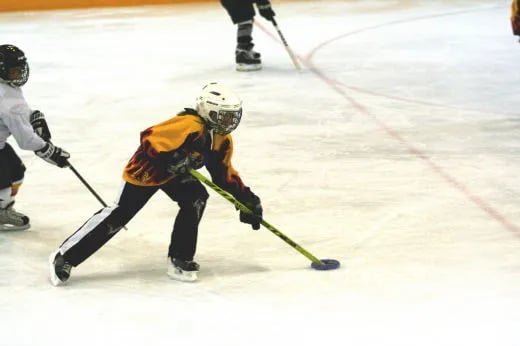
Ringette is frequently introduced through comparison: imagine hockey, replace the puck with a hollow rubber ring and change the sticks. The comparison is convenient, but it quickly becomes misleading. Ringette's rules produce a different rhythm, emphasizing rapid passing, coordinated movement and positional strategy. [1]
The sport was developed in northern Ontario in 1963 by recreation director Sam Jacks, who wanted a winter team game for girls. Experimental rules were tried in communities including Espanola, where the first game was played in the winter of 1963–64. [3]
Its distinctive mechanics begin with the ring itself. Players use straight sticks to spear and control it, while a 30-second shot clock prevents teams from keeping possession indefinitely. More importantly, a player cannot carry the ring across a blue line; it must cross by pass. [1][2]
That restriction changes the geometry of attack. Teammates without the ring have to anticipate play, create passing options and move into space. Individual speed remains valuable, but it cannot replace cooperation in the way a long solo rush sometimes can in other ice sports.
Ringette prohibits intentional body contact, yet describing it as gentle would miss the athletic demands. Elite play combines acceleration, balance, fast decision-making and precise passing, all while athletes wear the protective equipment expected in a high-speed ice environment. [2]
More than six decades after its invention, ringette supports recreational programmes, national championships and elite competition in Canada, and it is also played internationally. [4] Its history is Canadian, but its identity now rests less on where it began than on the particular kind of team play its rules create.
Discussion Questions
- How do a sport's mechanics influence the skills that athletes develop?
- What happens to team strategy when possession is limited by a shot clock?
- Why does the blue-line rule require players to anticipate play rather than simply follow the ring?
- Can a no-contact sport still have very high athletic demands? Give examples.
- How does a sport move beyond its country of origin and develop an international identity?
References
Finished reading? Mark this lesson as done.