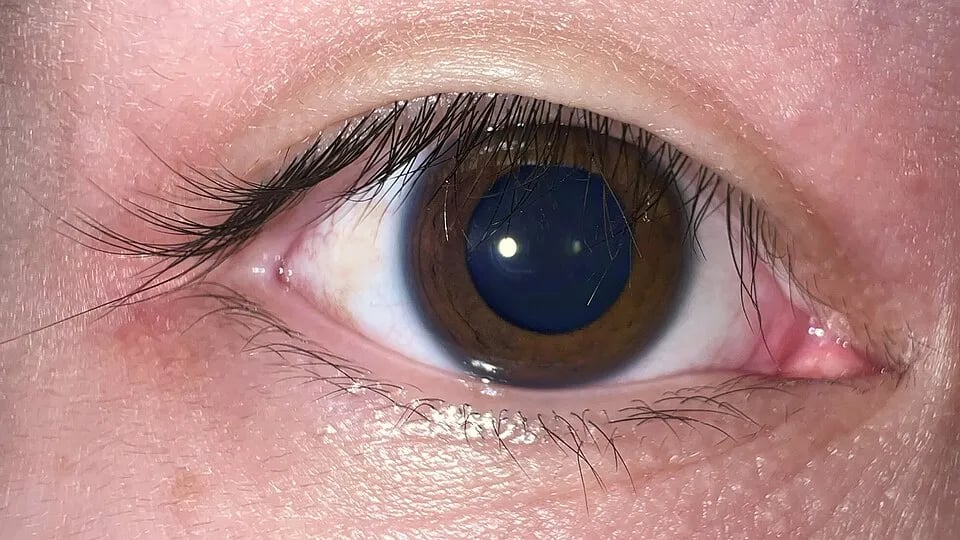
A Tiny Eye Signal When the Brain Updates Its Guess
Created by Brando Oxley · 23 Aug 2026
Key Vocabulary
an increase in the size of the pupil
Pupil dilation was stronger after unexpected information.
a short-term rise in physiological alertness
The study linked surprise to increased arousal.
an underlying situation or condition that must be inferred rather than directly seen
Participants had to notice when the latent state of the pattern changed.
a tendency for expectations to influence what a person perceives
Strong expectations can create perceptual bias.
the situation or framework used to interpret information
The brain may update its context after a major surprise.
Article
A surprising event does more than interrupt a prediction. It can force the brain to decide whether its existing model of the situation still applies. Research led by Brown University, published in Nature Human Behaviour in August 2026, used pupil dilation and brain activity to examine that moment of adjustment. [1][2]
Sixty-three participants completed color-prediction tasks in which the statistical pattern could change. Researchers tracked pupil dilation while also recording EEG signals. Unexpected colors produced stronger physiological responses, including dilation and a larger P3a brain response. [1][2]
The study interprets these responses as markers of arousal rather than as direct measurements of thought. Arousal appears to become especially strong when evidence suggests a transition from one hidden, or latent state, to another—for example, when a pattern that had been useful suddenly stops predicting what comes next. [2]
That transition mattered for perception. Participants could show perceptual bias toward what they expected to see, but stronger surprise-related signals were associated with less influence from those previous expectations. The same signals were also linked with changes in subsequent learning. [1][2]
In practical terms, the system may help the brain reset its context. Instead of treating each surprising item as an isolated mistake, the brain can sometimes infer that the situation itself has changed and place more weight on recent evidence. [1]
The authors do not claim that every dilated pupil reveals a hidden change in belief. Pupil diameter is affected by light and other factors, and the experiments involved tightly controlled tasks. The value of the measurement is that, under those conditions, it provides an external marker related to rapid changes in arousal. [1][2]
The study turns a familiar physical reaction into a useful scientific clue. A pupil becoming wider may last only a moment, yet that moment can coincide with the brain loosening its grip on an old expectation and deciding that a new pattern deserves attention.
Discussion Questions
- In what situations is perceptual bias most likely to affect people's judgments?
- How can people recognize that the context of a problem has changed rather than assuming they simply made one mistake?
- Why are external measures such as pupil dilation useful even when they cannot reveal thoughts directly?
- Where in professional life can a sudden change in a latent state require fast learning?
- What would make you cautious about applying laboratory findings about arousal to everyday behavior?
References
- Brown University, "Why do people’s pupils dilate when they’re surprised? Brown researchers explain." Source
- Nature Human Behaviour, "Fluctuations in arousal reflect latent state transitions that facilitate behavioural optimization." Source
- EurekAlert!, "Why do people's pupils dilate when they're surprised? Brown researchers explain." Source
Finished reading? Mark this lesson as done.