A Tiny Translator Between Two Eras of Airplane Audio
Created by Brando Oxley
Key Vocabulary
something that connects two different systems or ideas
The transmitter acts as a bridge between the screen and the earbuds.
older technology that is still being used
The aircraft still relies on legacy audio equipment.
the process of connecting Bluetooth devices to each other
The pairing process took only a few seconds.
a delay between a signal being sent and received
Too much latency can make movie dialogue feel out of sync.
Bluetooth support built directly into a device or system
Native Bluetooth removes the need for an external transmitter.
Article
Few pieces of travel technology reveal a generational disagreement as neatly as an airplane seatback screen. The passenger arrives with wireless earbuds, noise cancellation and a charging case. The screen responds with a 3.5 mm headphone jack, a piece of hardware that has quietly survived several revolutions in personal electronics.
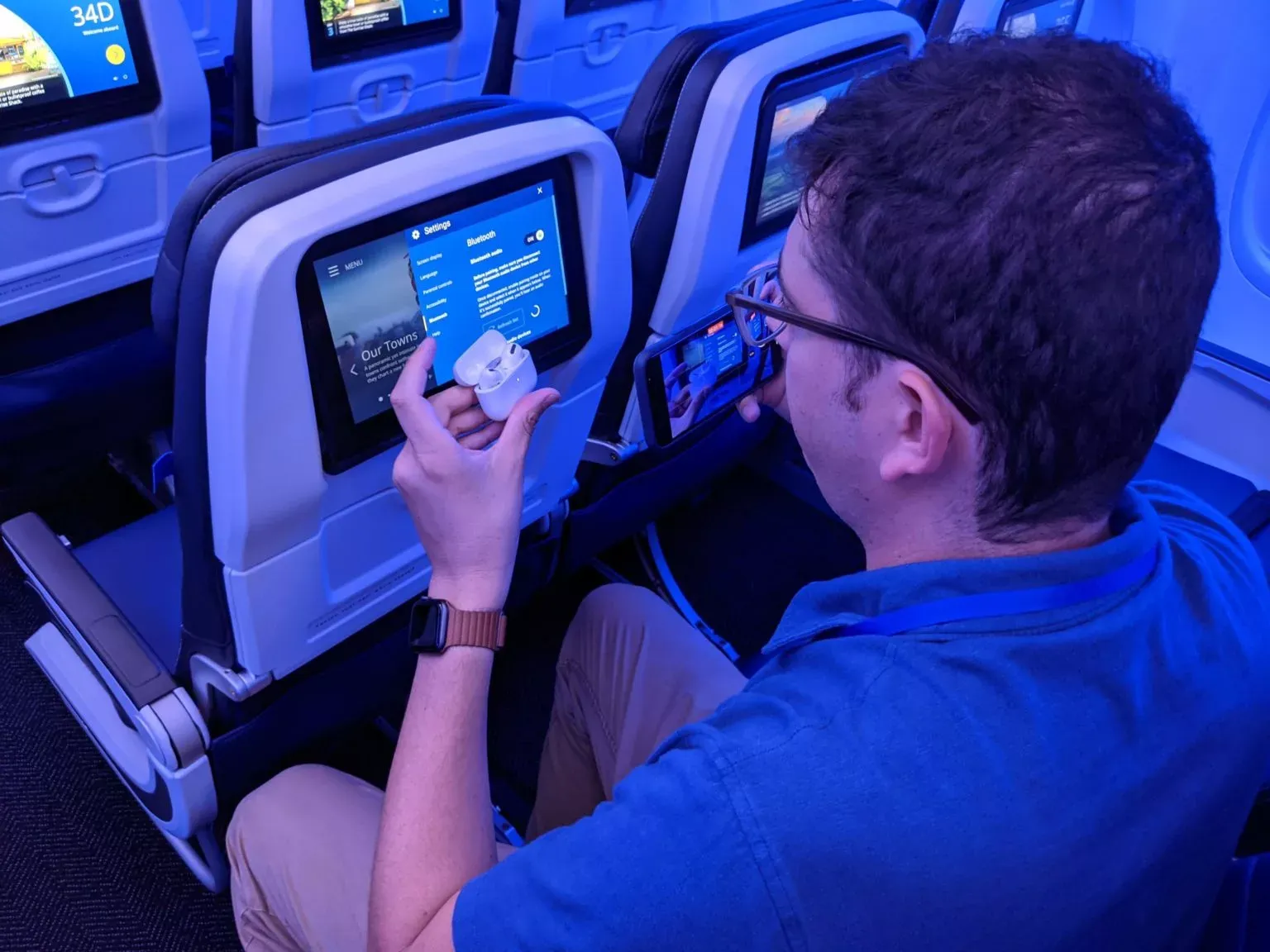
A Bluetooth transmitter acts as a bridge between those two eras. Plugged into the seat's audio output, it receives the wired signal and retransmits the sound over Bluetooth to paired headphones or earbuds. The entertainment system does not suddenly become modern; a tiny intermediary simply translates its legacy audio into a format newer headphones understand. [1][3]
The pairing process is usually similar to connecting earbuds to another device: place the headphones and transmitter in pairing mode, wait for them to recognize each other, and then start the film. The appeal is less about technological sophistication than about avoiding an unnecessary return to a second pair of wired headphones. [3]
The arrangement is not perfectly invisible. Bluetooth audio can introduce latency, meaning the sound may arrive slightly after the picture, depending on the equipment and audio technology involved. For a movie, even a modest delay can become noticeable when a character's lips and voice appear to disagree about when a sentence began. [3]
Meanwhile, the adapter is already being threatened by progress. Newer in-flight entertainment platforms increasingly offer native Bluetooth, allowing passengers to pair their own wireless audio devices directly with the seatback monitor. Panasonic Avionics, for example, documents Bluetooth support in newer entertainment systems, while also describing plug-in adapters as a stop-gap created by the transition away from wired consumer audio. [1][4]
That makes the airplane Bluetooth adapter an unusually charming gadget: useful because two technologies are moving at different speeds. Travelers should still follow airline rules for electronic devices and use airplane mode where required. [2] One day the adapter may look as dated as the headphone jack it was designed to rescue. Until then, it is a tiny translator doing diplomatic work at 10,000 metres.
Discussion Questions
- Why do you think legacy technology survives for so long in industries such as aviation?
- When is carrying a small bridge between old and new technology worthwhile, and when does it become unnecessary clutter?
- How much latency would you tolerate before wireless audio became annoying during a movie?
- What differences have you noticed between technology used on Japanese airlines and technology used elsewhere?
- Which everyday technology today do you think will look surprisingly old-fashioned twenty years from now?
References
Finished reading? Mark this lesson as done.