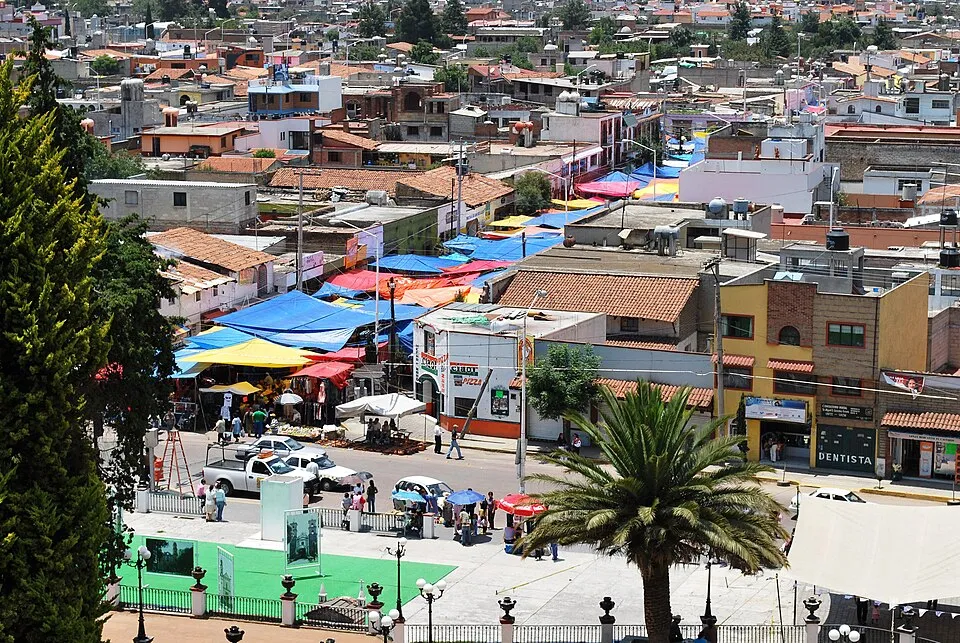
When the Street Becomes a Market: Mexico's Tianguis
Key Vocabulary
a temporary open-air market, often held regularly in Mexico
The Sunday tianguis fills the street with stalls.
a person who sells goods, often at a market or on the street
A fruit vendor arranged produce on a table.
existing or operating for only a limited time
The temporary market disappears in the afternoon.
a small stand or area where goods are sold in a market
Each stall sells different products.
to discuss a price or condition in order to reach an agreement
Some shoppers negotiate directly with vendors.
Article
On certain days in Mexican towns and neighborhoods, an ordinary street can change character. Vendors arrive early, open umbrellas or tarps, arrange tables and boxes, and create a temporary market known as a tianguis. By later in the day, much of it may disappear again. [1][3]
The word describes a tradition with deep roots. UNAM writing on Mexico City's markets connects buying and selling in public plazas with practices that reach back to the Mesoamerican period. Modern tianguis are not unchanged copies of ancient markets, but temporary public trading remains a familiar part of Mexican commercial life. [2]
What appears for sale depends on the place. A tianguis might offer fruit, vegetables, prepared food, clothes, household products, tools, electronics or second-hand goods. Mexico City's San Felipe de Jesús Sunday tianguis is known for sportswear and sneakers but sells a much wider variety of products. [1]
The temporary design is part of the system. Vendors use streets and open spaces rather than permanent shops, then pack their businesses away when market hours end. This allows the same physical space to serve different purposes on different days. [1][3]
Shopping can also be social. People meet neighbors, speak directly with sellers, compare products and sometimes negotiate prices. A regular weekly market can become part of a neighborhood's rhythm rather than simply a place to buy something.
Tianguis also require cooperation and rules because commerce shares space with pedestrians, traffic and local residents. The practical details—where stalls go, when streets close and how waste is handled—can shape how well a market fits its surroundings.
For a visitor, the most memorable feature may be the transformation itself. A street that looks ordinary one afternoon can become a dense corridor of food, voices, colors and bargaining the next morning, then return to normal after the stalls are gone.
Discussion Questions
- What kind of temporary or weekly markets exist in your country?
- What do open-air markets offer that supermarkets or shopping malls do not?
- How should cities balance street markets with traffic and residents' needs?
- What products would make you visit the same market every week?
- Why can regular markets become important social spaces for a neighborhood?
References
Finished reading? Mark this lesson as done.