Why Onggi Jars Help Kimchi Ferment
Created by Brando Oxley · 22 Aug 2026
Key Vocabulary
having many small holes that allow air or liquid to pass through
The onggi has porous clay walls.
a process in which microorganisms change food or drink
Fermentation gives kimchi its sour flavor.
a gas produced during many kinds of fermentation
The researchers measured carbon dioxide inside the jars.
helpful bacteria involved in fermenting foods such as kimchi
Lactic acid bacteria grow as the cabbage ferments.
an object used to hold or store something
The scientists compared two types of container.
Article
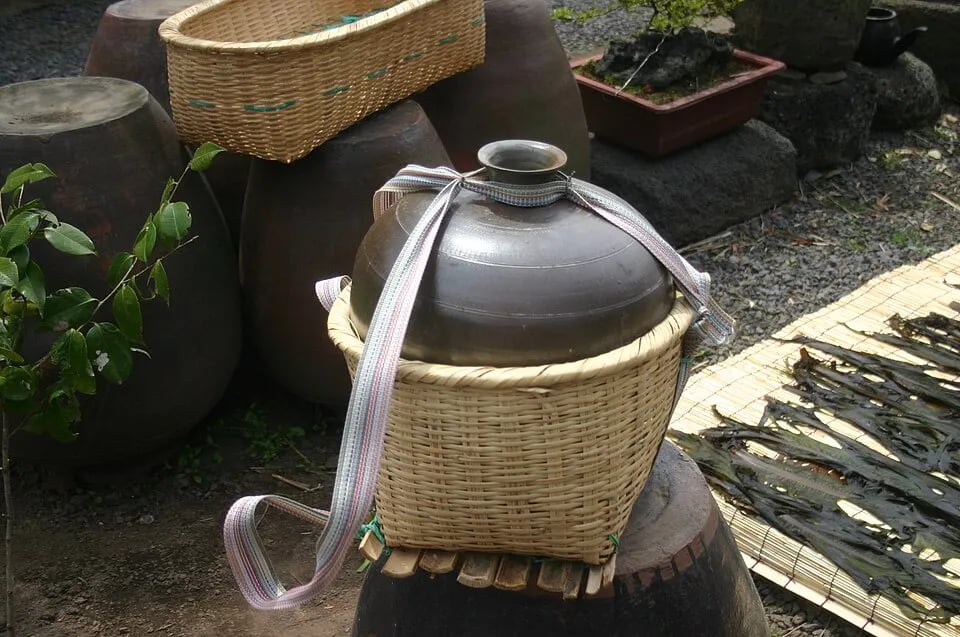
Korean onggi jars are often described as pottery that can 'breathe.' A 2023 study gave that old description a mechanical explanation by examining how gas moves through the jar's porous clay walls during fermentation. [1][3]
Researchers compared salted napa cabbage in an onggi with cabbage in a closed glass container. They focused on carbon dioxide, which is produced by lactic acid bacteria during fermentation. Sensors tracked the gas inside each container over 48 hours. [1][2]
Microscope and scanning tests showed that the onggi was porous, with many tiny connected openings in the clay. Carbon dioxide could move out through these walls, so the gas did not build up inside as much as it did in the glass container. [1]
The researchers then used a mathematical model to estimate how much carbon dioxide the fermenting cabbage was producing. In their experiment, cabbage in the onggi generated about 26% more carbon dioxide than cabbage in glass, which they interpreted as evidence of more bacterial growth. [1][2]
The movement of gas may create useful conditions for lactic acid bacteria. The paper also suggests that positive pressure and continuous outward gas flow can make it harder for larger contaminants to enter through the pores. [1]
This experiment was small and used salted cabbage rather than a complete kimchi recipe, so it should not be treated as proof that every onggi will produce the same result. Onggi can differ depending on clay, firing and glazing. [1]
Still, the study helps explain why a traditional container can work without electronic controls. The jar's material is part of the fermentation system: its walls quietly manage gas while the food changes inside.
Discussion Questions
- What traditional container is used for food in your culture?
- Why might a porous material be useful during fermentation?
- What should researchers test before saying one container is better than another?
- How do modern kitchen tools sometimes copy ideas found in older designs?
- Which fermented food would you choose for a similar experiment?
References
- Journal of the Royal Society Interface, "Onggi’s permeability to carbon dioxide accelerates kimchi fermentation." Source
- PubMed, "Onggi's permeability to carbon dioxide accelerates kimchi fermentation." Source
- Korea.net, "Onggi, traditional earthenware vessel in Korea." Source
- International Journal of Food Science & Technology, "Increased quality and functionality of kimchi when fermented in Korean earthenware (onggi)." Source
Finished reading? Mark this lesson as done.