America's Bookmobiles: When the Library Comes to You
Key Vocabulary
a vehicle that works as a mobile library
The bookmobile visits the village once each month.
one local building belonging to a larger library system
The nearest library branch is thirty kilometres away.
not receiving enough services or opportunities
The program brings books to underserved rural communities.
work that brings services directly to people who may not normally reach them
Mobile libraries are an important form of community outreach.
the ability or opportunity to use or obtain something
The bookmobile gives residents easier access to books and information.
Article
A library does not always need a building. In many parts of the United States, a bus, truck or van can arrive with shelves of books inside. These mobile libraries are called bookmobiles, and they bring library services directly to people who may live far from a branch.
American bookmobiles have been serving communities for more than a century. The American Library Association says they have worked in rural, urban, suburban and tribal areas, helping people reach books, information and lifelong-learning resources. [1]
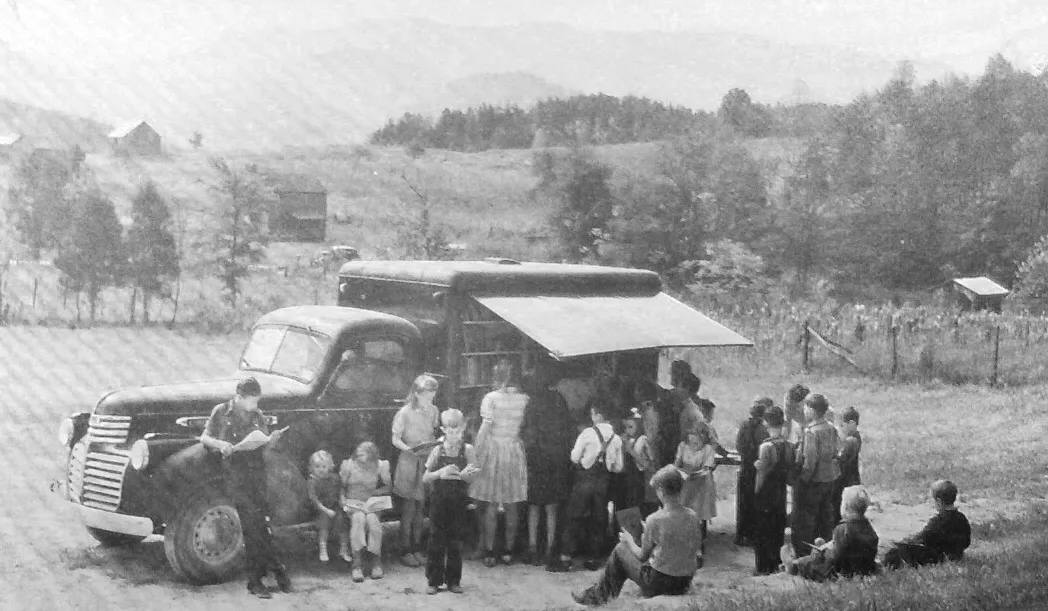
Early versions could look very different from today's vehicles. Historical photographs in the Library of Congress show books being carried by wagons, trucks and temporary mobile services. In 1937, for example, a customized bookmobile began serving Gaston County, North Carolina. [2]
Modern bookmobiles may carry much more than printed books. Some offer computers, internet access, children's activities or help from a librarian. During the COVID-19 period, the Institute of Museum and Library Services highlighted libraries that used mobile vehicles to provide Wi-Fi and other services outside normal library buildings. [3]
The basic idea is practical: take the library to the reader instead of expecting every reader to travel to the library. That can matter in large rural counties, communities without nearby branches, senior housing, schools or places where transportation is difficult.
New Mexico offers one current example. Its State Library operates three bookmobiles for rural and underserved communities, alongside a books-by-mail program. [4] The service shows that an old idea can still solve a modern access problem.
A bookmobile may look modest beside a large central library, but its purpose is ambitious. It tries to make distance less important. When the library can move, a person does not have to live near an impressive building to have a place in the reading community.
Discussion Questions
- What services should a modern mobile library provide besides books?
- Which people in your community have the most difficulty reaching public services, and why?
- How important are physical libraries now that so much information is available online?
- What service in your city would be useful if it could travel directly to different neighbourhoods?
- What makes a library feel like part of a community rather than simply a place that stores books?
References
- American Library Association, "Outreach Resources for Services to Bookmobile Communities." Source
- Library of Congress, "Books on the Move: Bookmobiles, Mobile Libraries and More." Source
- Institute of Museum and Library Services, "Wi-Fi on Wheels: How—and Why—Libraries are Bringing Their Services to Communities." Source
- New Mexico State Library, "Bookmobiles." Source
Finished reading? Mark this lesson as done.