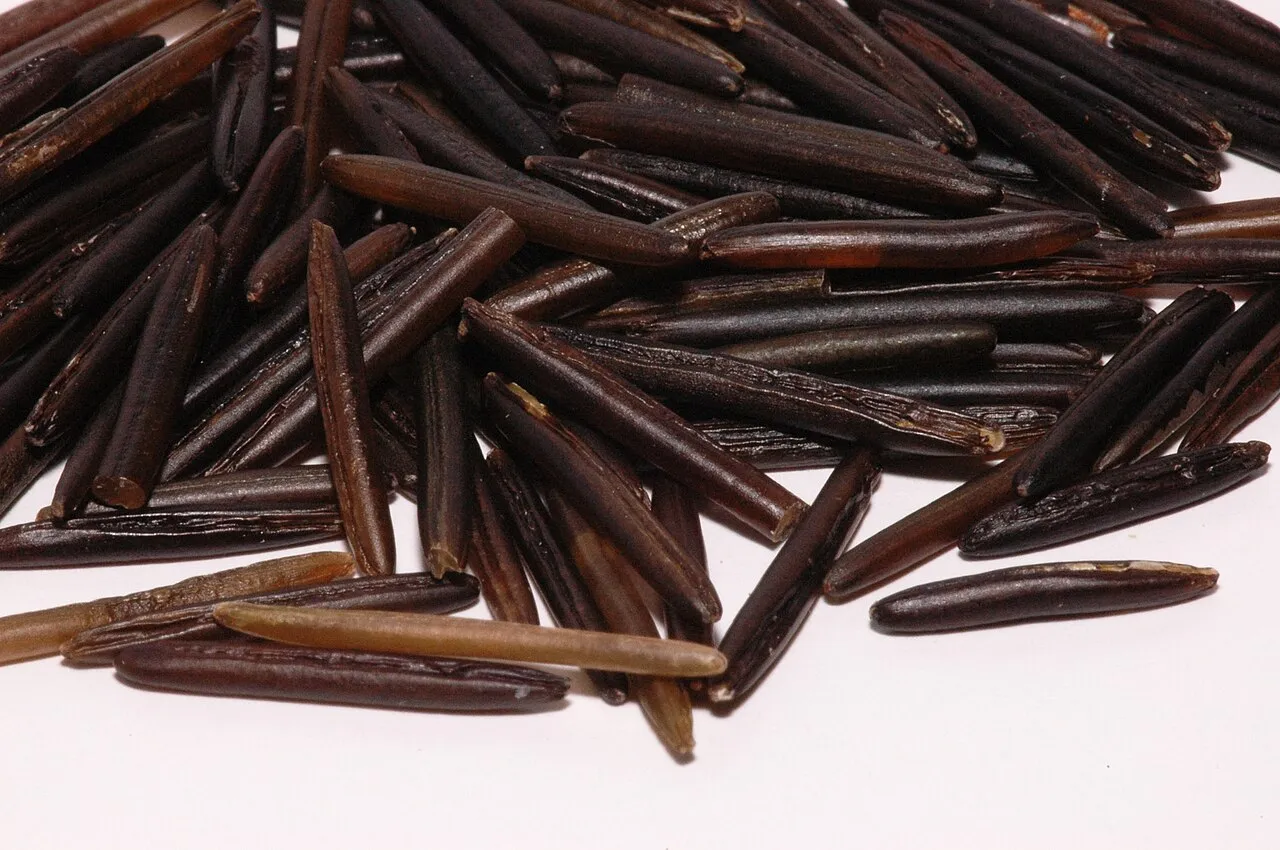
Canada's Wild Rice: The Rice That Isn't Really Rice
“This is one of my favourite Canadian foods!” — Brando
Key Vocabulary
relating to the people who originally lived in a place before other groups arrived and settled there.
The restaurant served chicken with Canadian wild rice.
Living or growing in water.
Wild rice has been an important food for some Indigenous communities in Canada for many generations.
Describing rice with short, rounded grains that often become sticky when cooked.
Japanese sushi is normally made with short-grain rice.
Firm enough that you need to chew it several times.
Wild rice has a firmer and chewier texture than soft white rice.
Having a flavour or smell that is slightly similar to nuts.
The wild rice added a nutty flavour to the meal.
Article
Listen to your teacher read each paragraph, then repeat it aloud. Loop a paragraph or slow it down while you practice.
Put Canadian wild rice beside a bowl of Japanese white rice and they barely look related. One is pale, soft and compact. The other has long, dark grains that look almost like tiny twigs. Then comes the surprise: technically, wild rice is not actually rice.
Wild rice belongs to a group of aquatic grasses called Zizania, rather than the Oryza group that includes the rice eaten across East Asia. Canada's food regulator officially recognizes "wild rice" as its normal common name, even though it is botanically a grass. So, for an English learner shopping or talking about food in Canada, "wild rice" is exactly the term to use. [1]
Wild rice also has a much older Canadian story. It has been harvested by Indigenous peoples around the Great Lakes and other parts of Canada for generations. Among Anishinaabeg communities, you may see the name manoomin, and Parks Canada describes it as an important traditional and sacred food. These Indigenous names and traditions are worth knowing, but in general Canadian English conversation, "wild rice" is the most useful starting point. [2]
Now compare it with rice from Japan. Japanese rice is usually a short-grain japonica variety. When cooked, the grains become plump and stick together, which makes the rice useful for chopsticks, rice bowls and sushi. Japan's agriculture ministry describes this rice as short, round and naturally sticky after cooking. [3] Wild rice behaves very differently: its grains remain more separate, with a firmer, chewier texture and a noticeably nutty flavour.
Korean food provides another useful comparison. Steamed rice is a central part of many Korean meals, and short-grain rice is an important staple. [4] Wild rice is less likely to play the role of a soft bowl of rice beside every dish. In Canada, it may appear as a side dish, in a grain mixture, or as part of soups and salads. Trying to make sushi with it would be an ambitious experiment. Your roll might have other plans.
There is another small surprise hiding in the word "wild." Canadian rules say wild rice can still be called wild rice whether it grew naturally in a lake or was cultivated in a paddy. In other words, "wild" describes the type of grain, not necessarily a dramatic life spent growing freely in the Canadian wilderness. [1]
Canada does not have the same everyday rice culture found in Japan or Korea, but wild rice gives the country a grain with a distinctive local identity. If you see it on a Canadian menu or supermarket shelf, asking for "wild rice" will get the conversation started. Knowing that it is actually an aquatic grass with deep Indigenous history gives you the much better second sentence.
Discussion Questions
- What type of rice is most commonly eaten in your country, and how would you describe its texture?
- How would you explain Canadian wild rice to someone who had only eaten Japanese or Korean white rice?
- Which dishes from your country might work well with a firmer, nuttier grain such as wild rice?
- What traditional grain or local food from your country might surprise foreigners?
- How useful is it for language learners to know both the everyday English name of a food and its deeper cultural or traditional names?
References
- Canadian Food Inspection Agency, "Labelling and Composition Requirements for Grain and Bakery Products: Wild Rice." Source
- Parks Canada, "Manoomin (Wild Rice)." Source
- Japan Ministry of Agriculture, Forestry and Fisheries, "The Delight of Japanese Food: Rice." Source
- Korea.net, "Cooking Korean Food at Home." Source
Finished reading? Mark this lesson as done.