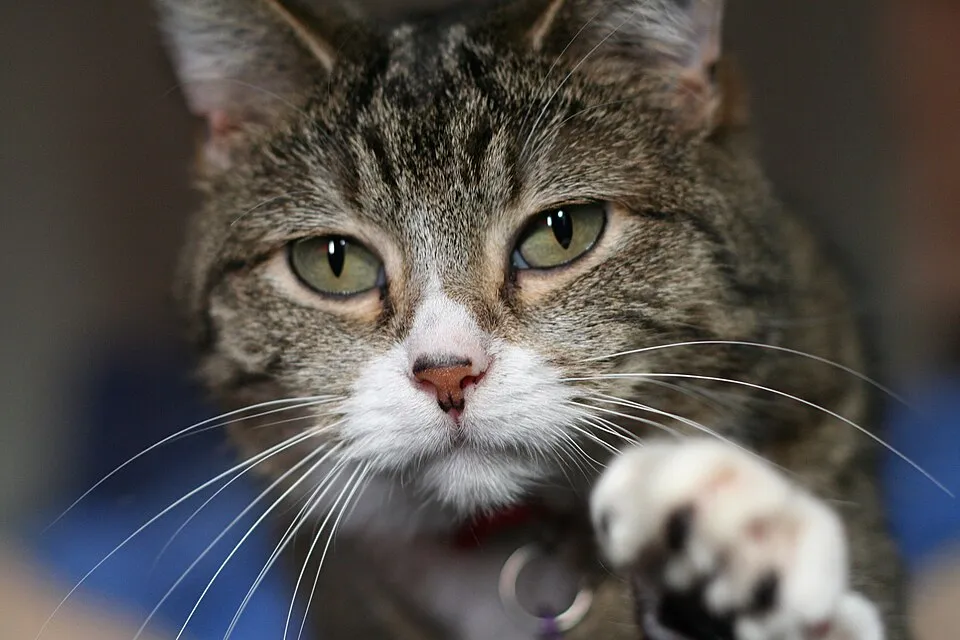
Canberra’s Cats Are Grounded: The 24-Hour Cat Rule
Key Vocabulary
Keeping an animal within a controlled area so it cannot freely leave.
Cat containment can include an enclosed garden or indoor living.
To move around freely without following a fixed route.
The older cat likes to roam through several nearby gardens.
An area surrounded by walls, fencing or another barrier.
The family built an outdoor enclosure where their cat could climb safely.
Wild animals that naturally belong to a particular country or region.
The law is partly designed to protect native wildlife from roaming cats.
A natural desire or behaviour that makes an animal search for and catch prey.
Even a well-fed house cat can have a strong hunting instinct.
Article
Listen to your teacher read each paragraph, then repeat it aloud. Loop a paragraph or slow it down while you practice.
Imagine being a young cat in Canberra. The sun is shining, a suspicious-looking bird lands outside, and your hunting instincts say, "Go!" Unfortunately for you, the law says otherwise. In the Australian Capital Territory, or ACT, all cats born after July 1, 2022 must be kept on their owner’s property 24 hours a day. [1]
This does not mean every cat must spend its entire life staring sadly through a window. Containment can include living inside the house, using an enclosed outdoor area, or going outside on a harness and leash. In some Canberra suburbs, the rule is even stricter: every cat must be contained, no matter how old it is. [1]
Older cats get an unusual legal advantage. Cats born before July 1, 2022 are generally allowed to continue roaming if they do not live in a designated cat-containment area. When the rules were introduced, the ACT Government said this gradual approach would avoid suddenly forcing older outdoor cats to change a lifetime of habits. [2]
So why has Canberra effectively told many cats, "You live here now"? One reason is the cats themselves. The ACT Government says contained cats are less likely to be hit by cars, injured in fights or exposed to some diseases. A cat may disagree strongly with this argument at 3 a.m., but staying home can remove several dangers from its daily adventures. [1]
The other reason has feathers, scales and very small feet. Australia has many native animals that evolved without domestic cats as predators. A major review published in Wildlife Research estimated that roaming pet cats kill about 390 million vertebrate animals in Australia each year, including about 241 million native animals. [3]
This creates a strange conflict because a cat can be both a much-loved family member and a highly efficient hunter. A well-fed cat may still stalk and kill wildlife because hunting is natural behaviour. From the cat’s point of view, that lizard in the garden may simply look like tonight’s entertainment.
Keeping an energetic cat contained therefore requires more than closing a door. Owners can provide climbing structures, scratching posts, toys, hiding places and opportunities to chase or explore. Outdoor enclosures allow cats to experience fresh air while preventing them from wandering through the neighbourhood. The ACT Cat Plan encourages owners to make containment safe and interesting for their pets. [4]
Canberra’s rules are part of a larger debate in Australia about what responsible cat ownership should mean. Some people believe cats should have freedom to explore outdoors. Others argue that protecting wildlife and keeping pets safe justifies stronger restrictions.
The law also shows how differently societies can treat the same animal. In some countries, an outdoor cat wandering between gardens is completely normal. In parts of Canberra, the same behaviour can mean that the owner is breaking a containment rule.
Cats, naturally, were not consulted. If they had been, the negotiations might still be continuing. But Canberra’s experiment raises a serious question beneath the whiskers and attitude: when a pet’s natural behaviour affects wildlife and public spaces, how much responsibility should belong to the owner?
Discussion Questions
- Should house cats be allowed to roam freely outdoors in your community, and what are your reasons?
- How could an owner make indoor life interesting for a cat that wants to explore?
- Which is more important in this situation: a cat’s freedom, its safety or the protection of wildlife?
- How are outdoor cats viewed in your country or community?
- What other rules should pet owners follow when their animals can affect neighbours or wildlife?
References
- ACT Government City Services, "Cats." Source
- ACT Government, "New Laws for Cat Containment and Cat Registration." Source
- Legge et al., Wildlife Research, "We Need to Worry About Bella and Charlie: The Impacts of Pet Cats on Australian Wildlife." Source
- ACT Government City Services, "ACT Cat Plan 2021–2031." Source
Finished reading? Mark this lesson as done.