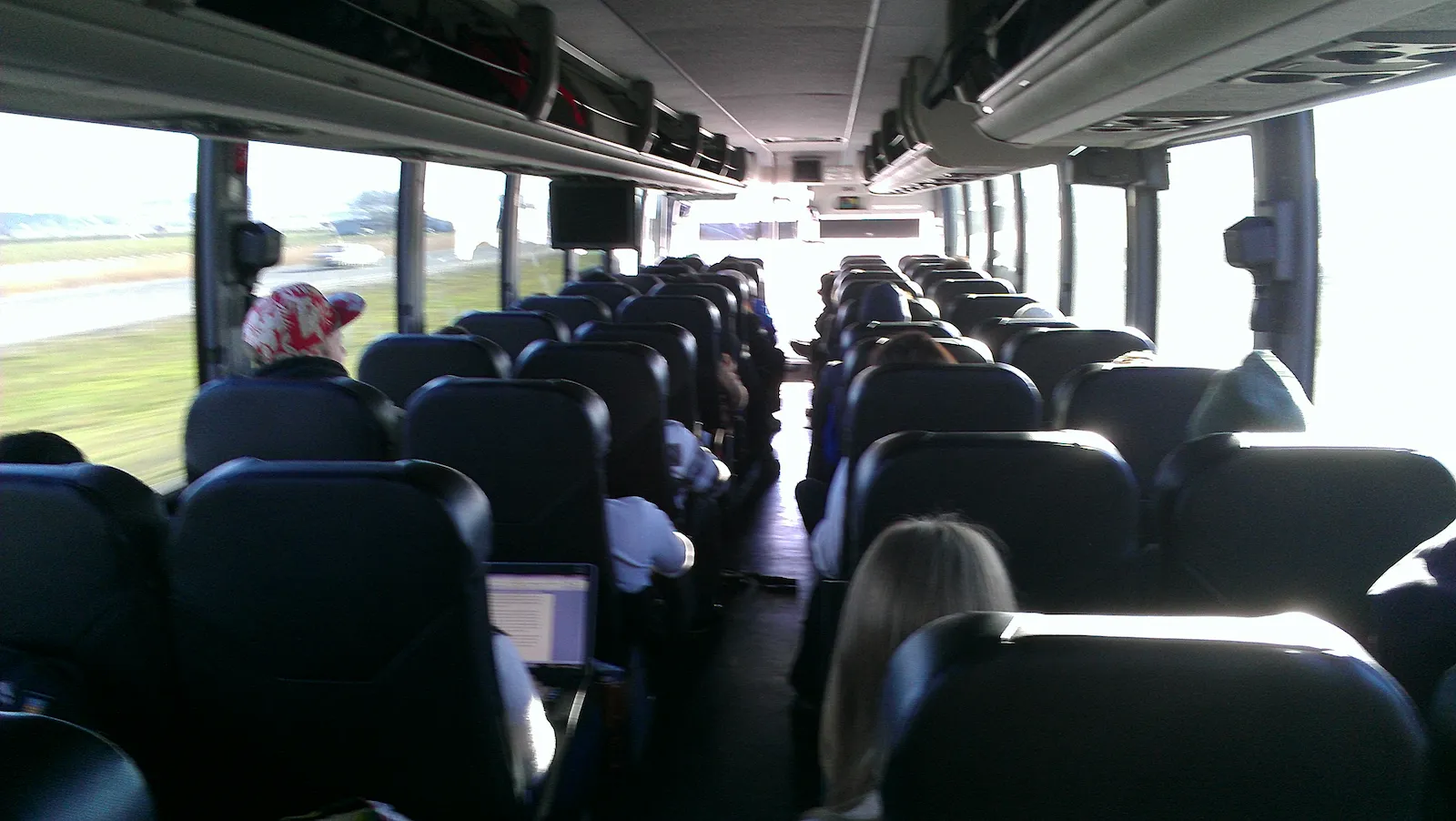
Choosing a Seat on the Bus
Key Vocabulary
a person you do not know
On a bus, you often sit near strangers.
for yourself; away from other people
A window seat can feel more private.
the walkway between seats
An aisle seat makes it easier to stand up and leave.
full of people, with little empty space
When the bus is crowded, bags cannot stay on empty seats.
showing good manners and respect for others
Moving your bag for another passenger is polite.
Article
You get on a bus and see many empty seats. You look around for a few seconds, then choose one. It feels like a small decision, but people often think about space and comfort without realizing it.
On a bus, strangers sit close together. Most people prefer a little personal space. They may choose a seat far from others when possible. An empty seat beside them can feel like a small wall. [1]
Many riders like window seats because they feel more private and give them something to look at. Others choose aisle seats because they are easier to leave. Some people sit near the door when they want to get off soon. [1]
People also use small actions to protect their space. They may put a bag beside them, look at their phone, or avoid eye contact. These actions can make other passengers less likely to sit nearby. [2]
When the bus becomes crowded, these choices disappear. Bags move, empty seats fill, and people sit closer together. At that point, good manners become more important. [2]
Seat habits can also change from place to place. In a quiet town, people may leave more space. In a busy city, sharing seats happens quickly.
Next time you ride a bus, notice what you do first. Your seat choice may say more about comfort, privacy, and public space than you expect.
Discussion Questions
- Where do you usually sit on a bus or train? Why?
- Do you ever put a bag on the seat next to you? How do you feel when someone asks you to move it?
- Would you rather sit by the window or by the aisle? Why?
- In your city, do people leave empty seats between strangers? What happens when the bus is full?
- Is it more important to have personal space or to be friendly to strangers on public transport?
References
Finished reading? Mark this lesson as done.