Disc Golf: When a Walk Becomes a Game
Key Vocabulary
a flat round object that can be thrown through the air
She chose a different disc for the longer hole.
the metal target that players try to throw the disc into
His final throw landed beside the basket.
the ability to hit or reach the correct place
Good accuracy is more useful than simply throwing very hard.
doing the same thing many times in a way that may become boring
She prefers games because ordinary exercise sometimes feels repetitive.
a public place designed for sports and leisure activities
The city built a disc golf course inside a recreation area.
Article
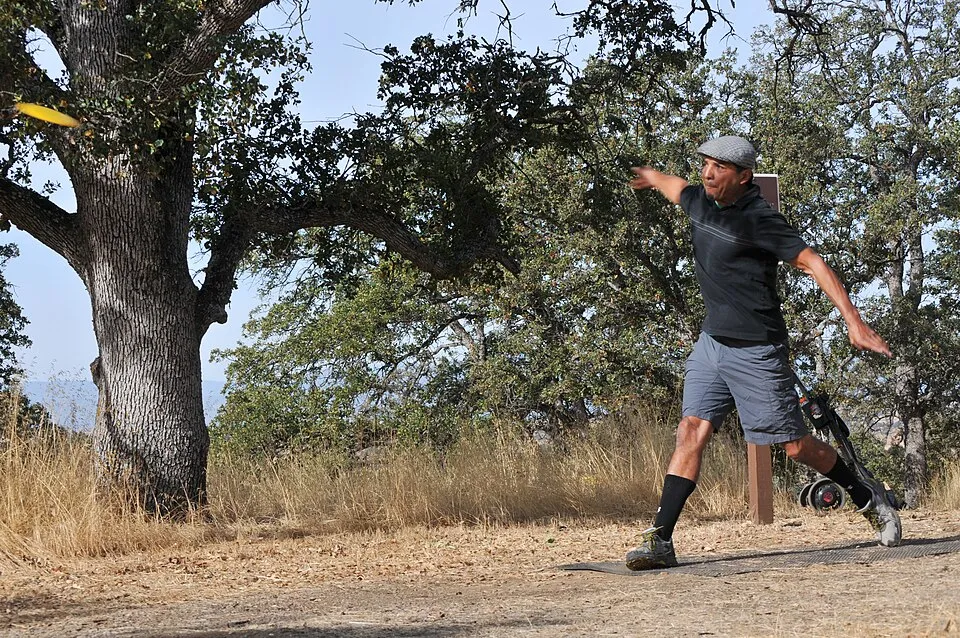
Disc golf takes a familiar idea from golf and changes the equipment. Instead of hitting a ball toward a hole, players throw flying discs toward metal baskets. The goal is still to finish each hole in as few attempts as possible. [1]
The modern sport developed in the United States during the 1970s. The Professional Disc Golf Association was founded in 1976, and the sport gradually spread through parks, schools and recreation areas. [1] Many courses are free to use after a player buys a few discs.
One reason disc golf appeals to casual players is that a round naturally includes a lot of walking. A study of 335 players on 15 courses found that an 18-hole round averaged about 5,613 steps. [2] The exact amount depends on the course and the player, but walking is built into the game.
The sport also mixes exercise with a skill challenge. Players choose different discs, judge distance and wind, and try to avoid trees, hills or water. A beginner can enjoy the course without throwing very far, while experienced players can spend years improving accuracy and technique.
Disc golf is not a complete fitness program by itself. U.S. health guidelines recommend that adults get at least 150 minutes of moderate-intensity aerobic activity each week and also do muscle-strengthening activity on two days. [3] A round of disc golf can contribute to the movement side of that goal.
Public parks are a natural home for the sport because a course can share space with wooded or open areas. Some communities have built courses through partnerships between local clubs and public agencies, giving people another reason to spend time outdoors.
The attraction is easy to understand: a walk becomes a game, and a game becomes a reason to keep walking. For people who dislike exercise that feels repetitive, chasing a disc through a park may make movement feel less like a workout and more like an afternoon with a scorecard.
Discussion Questions
- What outdoor activities make exercise feel more like a game to you?
- Which sports are easiest for beginners to start in your country, and why?
- How should cities decide which sports or activities to provide space for in public parks?
- Would you rather walk for an hour or play a sport that involves an hour of walking? What makes the experience different?
- What inexpensive activity could encourage more people in your community to spend time outdoors?
References
Finished reading? Mark this lesson as done.