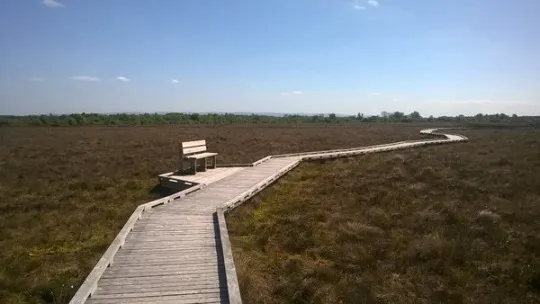
From Turf to Restoration: Ireland's Changing Peatlands
Key Vocabulary
waterlogged land where partly decayed plant material has accumulated as peat
Restoring a damaged peatland can take many years.
the level below which the ground is saturated with water
Drainage lowered the water table and caused the bog to dry.
raising water levels again in land that has been drained
Rewetting is a central technique in many bog-restoration projects.
work that returns damaged land or a system to a healthier condition
The rehabilitation programme covers former peat-production land.
the work or activity that provides someone with the money needed to live
Environmental policy can affect a community's traditional livelihood.
Article
For generations, peat - or turf - was cut from Irish bogs, dried and burned as domestic fuel. In the Midlands, industrial peat harvesting also became closely tied to employment and electricity production. That history means peatlands are not only ecosystems; they are landscapes connected with work, family traditions and regional identity.
Ecologically, however, intact bogs perform functions that are difficult to replace. Ireland's National Parks and Wildlife Service notes that actively forming peat can lock carbon away for thousands of years. Healthy bogs can also hold and slowly release water, supporting water quality and reducing flood risk. [1]
The difficulty begins when a bog is drained. Lowering the water table allows oxygen into peat that formed under waterlogged conditions. The stored organic material then begins to break down more rapidly, releasing carbon. Traditional turf cutting, industrial extraction, forestry and drainage have all altered Irish peatlands over time. [1]
Restoration often starts by reversing that basic change. Drains can be blocked so that water levels rise again - a process generally called rewetting. Bord na Móna says it is using peat dams and other methods to return former drained bogs toward peat-forming conditions, with a target of 8,125 hectares in its raised-bog restoration work. [2]
This is part of a larger economic transition. In 2020, the Irish government approved €108 million for a major Bord na Móna bog rehabilitation scheme as peat harvesting declined. The programme was designed not only around carbon and biodiversity, but also around employment, including work for people with experience in the peat industry. [3]
Rehabilitation does not mean that decades of disturbance disappear. Some former industrial bogs may develop into wetlands or other habitats rather than becoming exact copies of their earlier state. Water levels, vegetation, surrounding land and the depth of remaining peat all influence what is possible.
The social question is equally complicated. A policy can describe turf as a source of emissions, while a family may remember it as winter fuel cut by parents and grandparents. Effective restoration therefore involves more than engineering. It also requires conversations about property rights, livelihoods, access and what communities want these landscapes to become.
Ireland's changing bogs show why environmental transitions are rarely clean breaks between a bad past and a good future. The same landscape can hold carbon, wildlife, jobs and memories at once. Restoration succeeds most fully when it recognizes all of those layers while giving the land a chance to become wet - and living - again.
Discussion Questions
- How should governments respond when an environmentally damaging activity is also part of a region's cultural identity and employment history?
- What landscapes in your country have been changed by farming, mining, energy production or urban growth, and what should happen to them now?
- How much public money should be spent restoring ecosystems whose recovery may take decades?
- What responsibilities should companies have after they stop extracting natural resources from an area?
- When environmental restoration and local traditions conflict, what kind of compromise seems fair to you?
References
Finished reading? Mark this lesson as done.