Hong Kong on Screen: When the City Becomes a Film Set
Key Vocabulary
the place or surroundings behind the main action of a story or event
Hong Kong's skyline provides a dramatic backdrop for many films.
filmed in a real place instead of inside a studio
The director chose to shoot on location in the busy streets of Central.
a place or specially built environment where a movie is filmed
The crew built a large film set to recreate the old neighbourhood.
having a dramatic or beautiful quality that seems suitable for a movie
The lights and narrow streets give the neighbourhood a cinematic atmosphere at night.
skill and care used to make something well
The detailed buildings showed the craftsmanship of the production team.
Article
Listen to your teacher read each paragraph, then repeat it aloud. Loop a paragraph or slow it down while you practice.
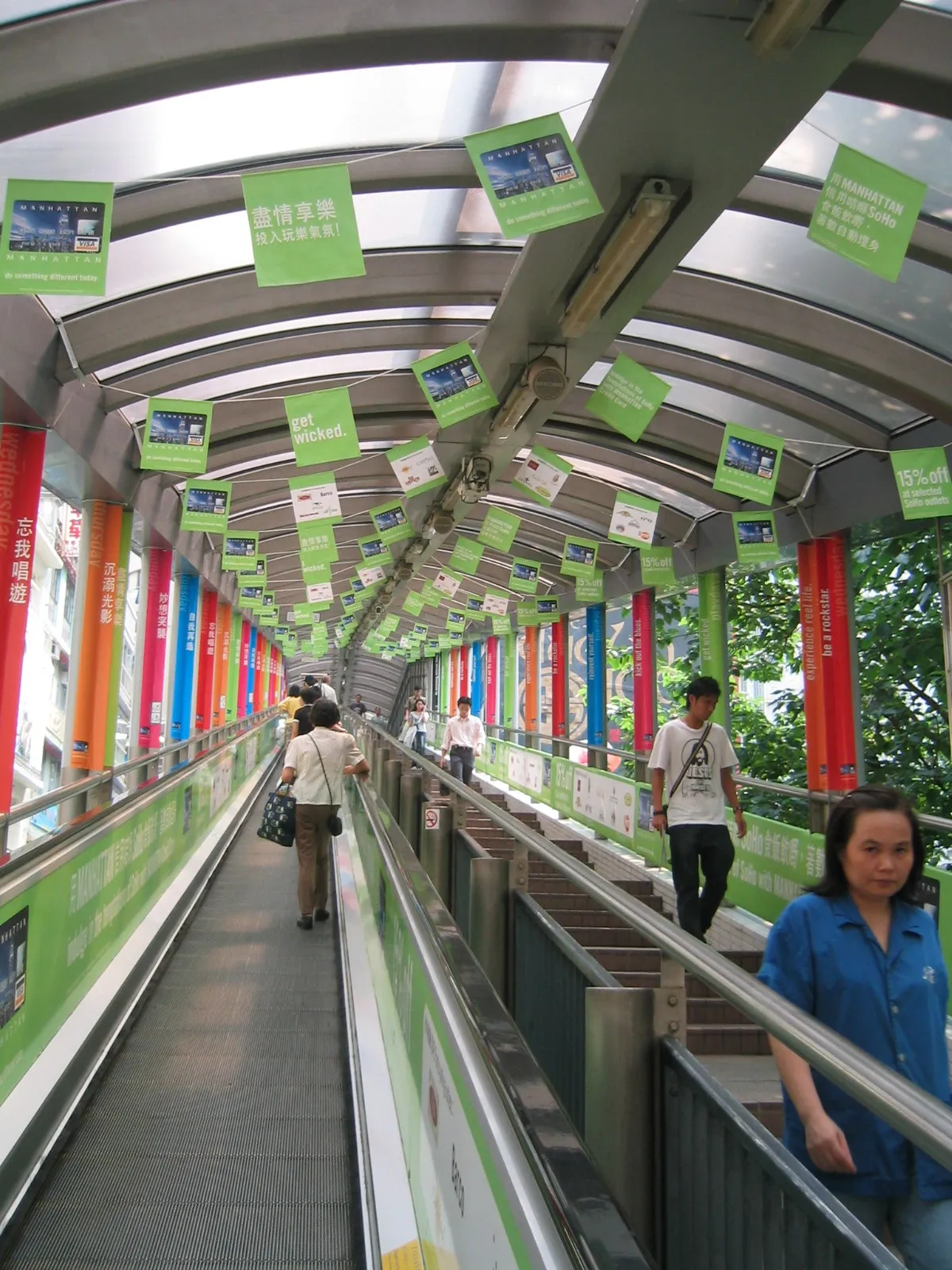
Ride through Central Hong Kong and some streets may look strangely familiar. The crowded sidewalks, narrow passages, tall apartment buildings and covered escalators have appeared in many movies. In Hong Kong cinema, the city is often more than a background. Its streets can feel almost like another character in the story.
Hong Kong developed one of Asia's most influential film industries. The Hong Kong Film Archive describes the 1980s as a golden era, when local movies were extremely popular and companies such as Shaw Brothers, Golden Harvest and Cinema City were major forces in the industry. The period also saw the growth of the Hong Kong New Wave and the establishment of the Hong Kong Film Awards. [1]
Part of Hong Kong's attraction for filmmakers is its unusual visual environment. Modern skyscrapers can stand close to traditional shops, crowded markets, old stairways and busy harbour areas. The Hong Kong Tourism Board notes that both local and international filmmakers have repeatedly used the city's changing urban landscape on screen. [2] A director can move only a short distance and find a completely different atmosphere.
A famous example is Wong Kar-wai's 1994 film Chungking Express. The movie tells two loosely connected stories about police officers, relationships and loneliness in Hong Kong. Instead of hiding the city inside large studio sets, the film uses recognizable parts of everyday Hong Kong. One of its best-known locations is the Central–Mid-Levels Escalator. The 800-metre system opened in 1993 and travels through the steep streets between Central and the Mid-Levels. The Hong Kong Tourism Board specifically identifies Chungking Express as a classic film connected with the escalator. [3]
This kind of location filming can change the way an audience sees an ordinary place. For thousands of people, the escalator is simply part of a daily journey. In a movie, however, the same structure can become romantic, lonely, exciting or mysterious depending on the camera, music and characters. Fans can later visit the real location and experience a small part of the film's world for themselves.
Hong Kong filmmakers are also famous for creating places that no longer exist. A recent example is Twilight of the Warriors: Walled In, which recreated the famous Kowloon Walled City. The real Walled City was demolished in the early 1990s, so filmmakers could not simply arrive with cameras and start shooting. Instead, Hong Kong film professionals constructed more than 50 detailed sets, and the production was built and filmed in Hong Kong. [4]
Some of those sets have now become attractions themselves. A free exhibition at the present-day Kowloon Walled City Park displays recreated spaces from Twilight of the Warriors: Walled In, including environments designed to suggest the crowded daily life of the former neighbourhood. The exhibition is scheduled to remain open until May 2028. [4] In this case, a film first recreated a lost part of Hong Kong, and then the film set became a new way for people to explore the city's history.
Hong Kong cinema's identity comes from both its filmmakers and the city around them. Sometimes directors use a real escalator, market or street exactly because it feels authentic. At other times, teams of designers and craftspeople rebuild an entire vanished neighbourhood. After watching these films, an ordinary walk through Hong Kong can feel different: the next staircase, restaurant or crowded street might already have its own place in movie history.
Discussion Questions
- What place in your city or country would make an interesting film location, and what kind of movie would suit it?
- Do you prefer movies that use real streets and buildings or movies that create large studio sets? What difference does it make to you?
- How can a famous movie change the way tourists and local people think about a particular place?
- If you visited Hong Kong, would you be more interested in seeing the Central–Mid-Levels Escalator from Chungking Express or the recreated Kowloon Walled City film sets? Why?
- Which film from your country shows a city, neighbourhood or local culture particularly well, and what makes its setting memorable?
References
Finished reading? Mark this lesson as done.