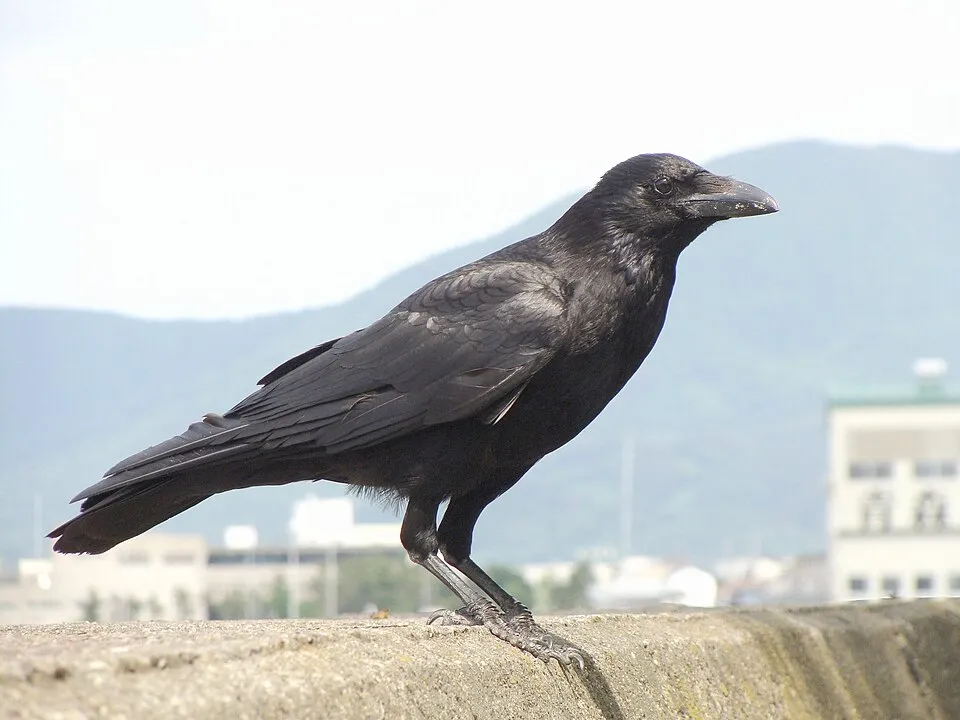
How Crows Learned to 'Count' Their Calls
Key Vocabulary
a sound produced by a person or animal
The scientists counted each crow vocalization.
a set of things that happen in a particular order
The crow produced a sequence of three calls.
related to numbers or quantities
The bird learned to respond to numerical information.
to use information to say what is likely to happen
The first sound helped researchers predict the number of later calls.
happening without a clear pattern or plan
The crow's answers were more accurate than random choices.
Article
Most people do not think of a crow's "caw" as mathematics. However, an experiment at the University of Tübingen found that carrion crows could learn to produce a specific number of calls, from one to four. [1][2]
Researchers trained three crows. The birds saw visual symbols or heard sounds that told them how many calls to make. After making the correct number, they selected a target to show that they had finished.
The birds performed the task successfully often enough to show that their responses were not random. More interestingly, the researchers found evidence that the crows planned the sequence before beginning.
The sound of the first call contained information that could help predict how many total calls would follow. [1] This suggests the bird was not simply making sounds and stopping by accident.
The birds also made mistakes. Sometimes they produced one call too many or too few. The pattern of errors suggested that a crow could lose track while producing its sequence, much as a person might make a counting mistake.
Researchers are careful about the word "count." Crows are not saying number words like humans. Instead, the experiment shows that they can connect a numerical instruction with a controlled number of vocal actions.
The study adds to growing evidence that complex number abilities are not limited to humans. A crow's brain is very different from ours, yet it can still solve a problem that requires planning quantity before acting.
Discussion Questions
- What is the difference between understanding a number and saying a number word?
- Which animal abilities have surprised you most?
- How can researchers avoid giving human meanings to animal behavior too quickly?
- What does an animal need to understand before we can say that it can count?
- Why is it useful to study intelligence in animals with brains very different from human brains?
References
Finished reading? Mark this lesson as done.