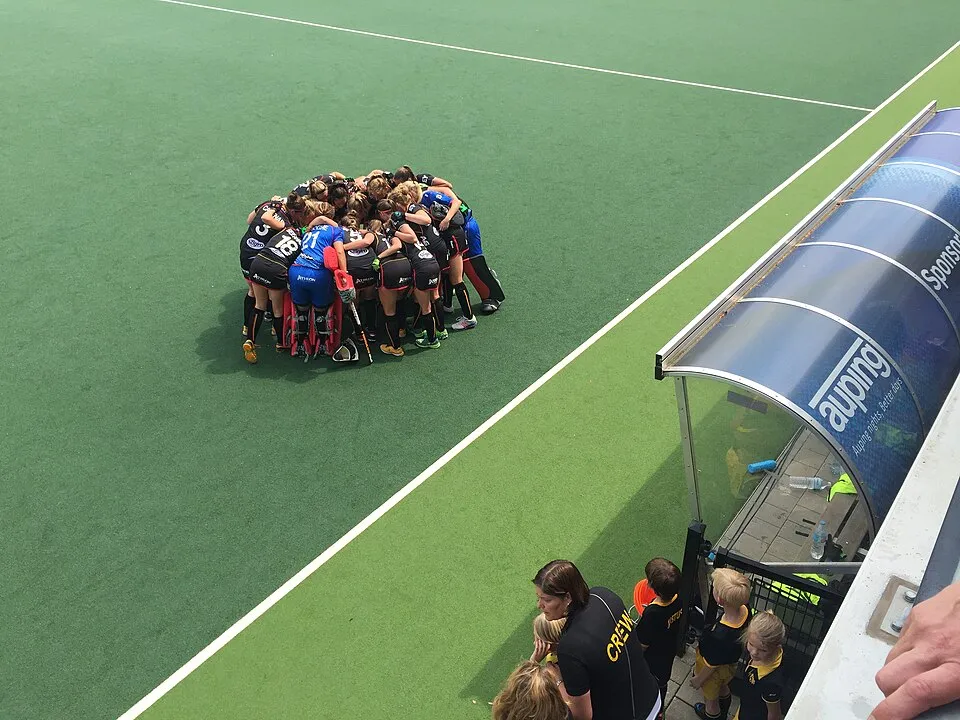
Two Countries, Two World Cups: Hockey in Belgium and the Netherlands
Key Vocabulary
to organize an event together with another country or organization
Belgium and the Netherlands co-host the World Cup.
the early part of a tournament where teams play in groups
Teams need strong results in the pool stage.
a stage where the losing team is eliminated
One mistake can end a team's tournament in the knockout round.
a special attacking situation in field hockey after certain defensive fouls
The team scored from a penalty corner.
a team's complete series of matches in a tournament
A difficult opening match can shape the whole World Cup campaign.
Article
Two neighboring countries are sharing one of field hockey's biggest events this month. The 2026 FIH Hockey World Cup began on August 15 and runs until August 30, with men's and women's tournaments taking place in Belgium and the Netherlands at the same time. [1][2]
Matches are split between the Belfius Hockey Arena in Belgium and the Wagener Hockey Stadium in Amstelveen, near Amsterdam. The competition brings 16 men's teams and 16 women's teams together for pool matches followed by knockout rounds. [1][3]
That structure makes this World Cup unusual for fans. Someone following the tournament is not watching only one national team or one competition. Men's and women's matches are happening across two venues and two countries, creating a shared event rather than two completely separate championships.
The hosts also bring strong hockey traditions. Belgium has become a major force in men's international hockey, while the Netherlands has a long record of success in both men's and women's competition. Home crowds in both countries can therefore expect important matches throughout the event. [2]
For players, the tournament is demanding. Teams may have only a short time to recover between matches, and a poor result in the pool stage can make the path through the knockout rounds much harder. Small details such as penalty corners, defensive discipline and managing the final minutes can change an entire campaign.
The co-hosting arrangement also shows how neighboring countries can share the cost and excitement of a major sports event. Instead of building everything in one place, the World Cup uses two established hockey centers and gives supporters in both countries a chance to attend. [1][2]
By August 17, the tournament is still in its early pool stage, so most of the story has not been written yet. That is part of the appeal: for the next two weeks, two national hockey cultures are sharing the same world stage.
Discussion Questions
- What makes co-hosting a sports event attractive to neighboring countries?
- How does holding men's and women's tournaments together change the experience for fans?
- Which sports have the strongest international tournaments in your country?
- What challenges might athletes face during a two-week championship?
- Would you travel across a border to watch part of the same tournament? Why?
References
Finished reading? Mark this lesson as done.