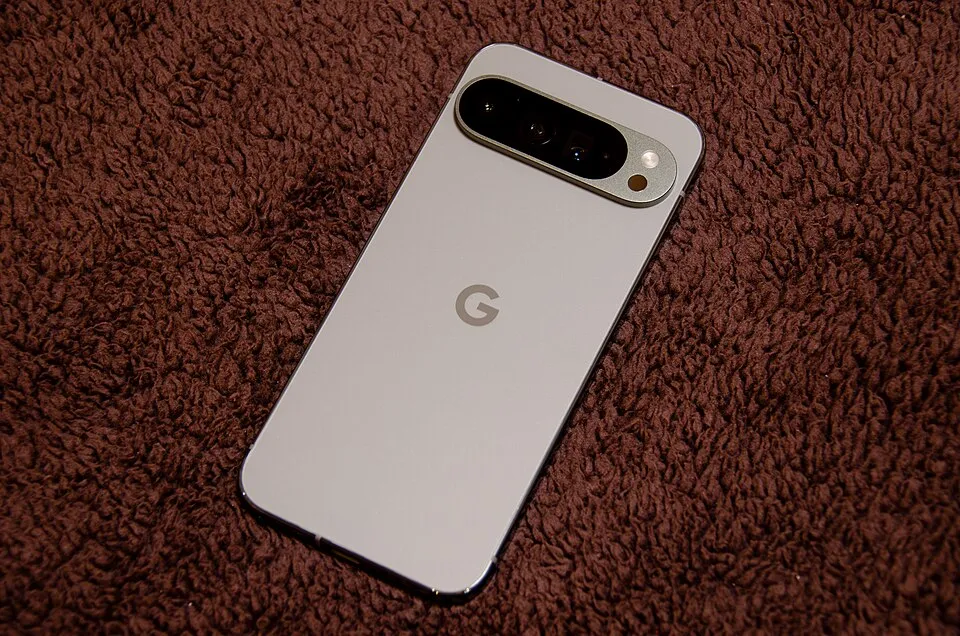
When AI Disappears Into the Device: Google's Pixel 11 Strategy
Key Vocabulary
built deeply into a larger system rather than existing separately
AI is increasingly embedded in the phone's normal functions.
the use of software and algorithms to create or improve photographs
Modern phone cameras depend heavily on computational photography.
disturbing someone's attention, privacy or activity
The company is experimenting with less intrusive notifications.
figuratively, something that connects separate parts of a system
AI may become the connective tissue between different devices and services.
done regularly until it becomes a normal habit
A technology becomes influential when its use becomes habitual.
Article
Google's Pixel 11 launch on August 12 suggests that the next stage of consumer AI may be less visible than the last. Rather than presenting artificial intelligence primarily as a chatbot waiting to be opened, Google is increasingly embedding Gemini into the ordinary mechanics of a smartphone. [1][2]
The Pixel 11, Pixel 11 Pro and Pixel 11 Pro XL are built around the Tensor G6 processor. Google says the chip includes substantially more AI-processing capacity than its predecessor and can perform supported on-device AI workloads more quickly and efficiently. [2]
The camera system demonstrates how hardware and machine learning now overlap. Larger or upgraded sensors collect the image, while Google's computational models influence zoom, low-light photography and image processing. The result makes it increasingly difficult to separate what the lens captures from what software constructs. [2]
Google is also experimenting with less intrusive forms of interaction. On the Pro models, HiLight uses colored LEDs around the camera flash to communicate certain information while the phone remains face down. Gemini can signal that it is listening, thinking or responding without requiring another conventional notification on the screen. [2]
This fits the wider Made by Google 2026 portfolio. The company announced tighter Gemini connections with apps and services alongside new phones, a smartwatch and its first Pixel Tag. [1][3] The strategy appears to treat AI as connective tissue across devices rather than as a product confined to one interface.
There is an important consumer question beneath the technical claims. AI embedded deeply into hardware may save time, but it can also make it harder for users to recognize when automated systems are acting, what information they use and when processing happens locally rather than remotely.
The Pixel 11 series is scheduled to reach stores on August 20 after opening for pre-order on August 12. [2] Its longer-term importance will depend less on benchmark improvements than on whether users find these embedded AI interactions sufficiently useful to become habitual.
Discussion Questions
- What changes when AI becomes embedded in ordinary device functions rather than accessed through a separate app?
- How clearly should technology companies tell users when an AI system is processing their information?
- Does computational photography make a photograph less authentic, or simply improve the camera?
- Which forms of smartphone notification are most useful without becoming intrusive?
- What would convince you that a new generation of smartphones represents a meaningful improvement rather than an incremental upgrade?
References
Finished reading? Mark this lesson as done.