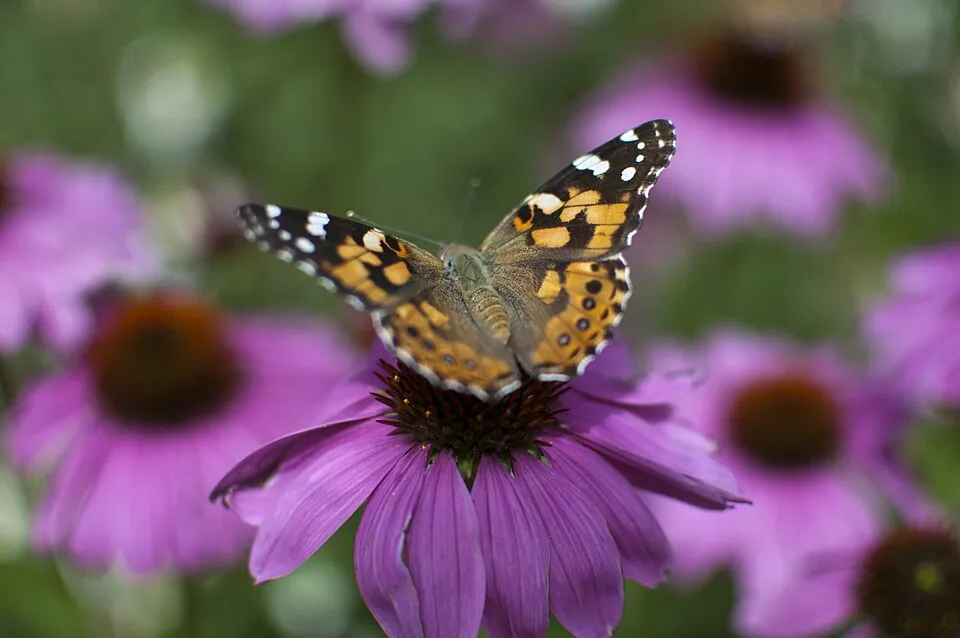
Butterflies Are Changing Where They Live
Key Vocabulary
the geographic area where a species normally lives
A butterfly's range can expand or shrink.
a change in which a species appears in new geographic areas
Range expansion was commonly reported in the dataset.
a change in which a species disappears from part of its former area
Some species had evidence of range contraction.
regular observation and recording over time
Long-term monitoring is stronger in some countries than others.
the information used to support a conclusion
The researchers built a large multilingual evidence base.
Article
Butterflies are changing where they live in many parts of the world. A large new study collected evidence from 1,758 species across 105 countries and territories to understand how their ranges are shifting. The research was published in Nature Ecology & Evolution in August. [1][2]
The team gathered 6,182 reports from hundreds of studies and expert assessments. They looked at three main changes: butterflies expanding into new areas, disappearing from parts of their old range, or moving to different elevations. [1]
Range expansion was the most commonly documented pattern. About 80% of species in the dataset had an expansion record, while 27% had contraction records and 22% had evidence of moving along elevation gradients. One species could appear in more than one category. [1]
Climate change and extreme weather were reported as important drivers for many of these changes. Butterflies respond strongly to temperature, and warming can make some places newly suitable while making other habitats harder to use. [1][2]
However, the researchers warn against treating the percentages as a complete picture of all butterflies. Europe has much stronger long-term monitoring than many tropical regions. In most countries, the study found range-shift evidence for fewer than 10% of the butterfly species known there. [1]
The researchers also included studies in 15 languages. They found that using only English-language research would have made range expansions look more dominant and would have missed some evidence of contractions. [1][2]
That is an important lesson for global science. To understand how nature is changing, researchers need information from many places and languages. A butterfly may be moving even when no scientific paper has yet recorded the journey.
Discussion Questions
- What changes in local wildlife have people noticed in your country?
- Why might butterflies be useful for noticing environmental change?
- How can poor monitoring make a country look more environmentally stable than it really is?
- Why should international research include studies written in many languages?
- What species would you most like scientists to monitor more carefully where you live?
References
- Chowdhury et al., "Extensive climate-induced range shifts in butterflies across the globe," Nature Ecology & Evolution. Source
- Helmholtz Centre for Environmental Research, "The scale of butterfly range shifts is far greater than previously known — affecting every continent." Source
- Nature Ecology & Evolution, "Extensive climate-induced range shifts in butterflies across the globe." Source
Finished reading? Mark this lesson as done.