Inside the Science of Japan's Snow Monkey Spa
Created by Brando Oxley · 24 Aug 2026
Key Vocabulary
the behavior of sitting or washing in naturally heated spring water
Hot spring bathing is common among some Jigokudani macaques.
a physical stress response occurring inside the body
The researchers measured a marker of physiological stress.
to avoid using more energy than necessary
Warm water may help the monkeys conserve energy.
an animal's position within the hierarchy of a group
Social rank affected access to the pool.
the ability to change behavior in response to conditions or opportunities
Using the hot spring shows behavioral flexibility.
Article
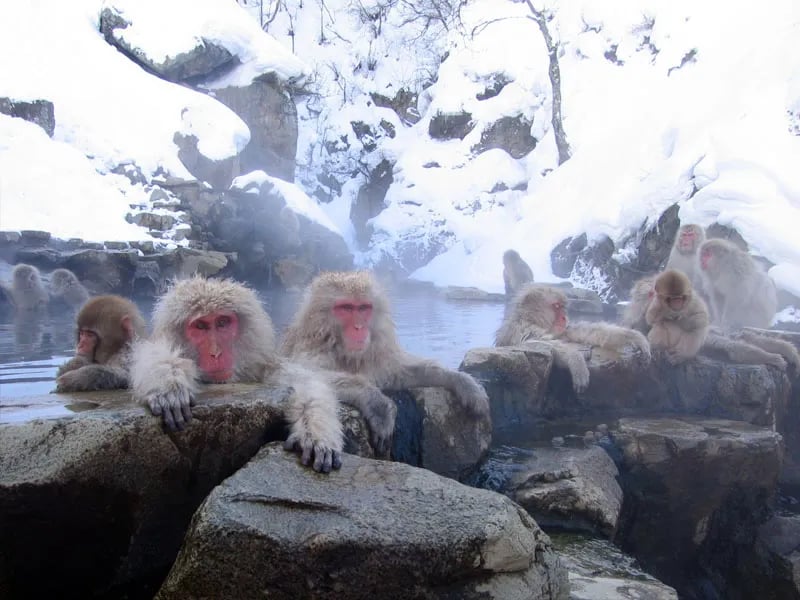
The photographs are irresistible: Japanese macaques sit shoulder-deep in steaming water while snow collects around Jigokudani in Nagano. The scene looks like a winter holiday, but researchers have found that hot spring bathing serves a practical biological purpose. [1][2]
The behavior began relatively recently. Kyoto University reports that a young female macaque entered a hotel hot spring in 1963, and other monkeys copied her. The park later built a pool specifically for the animals. By 2003, about one in three females in the group regularly bathed during winter. [1][3]
To test the benefits, a 2018 study followed 12 adult females during spring and winter. The team recorded how often each animal bathed and collected fecal samples that allowed them to estimate levels of glucocorticoid metabolites, which are used as indicators of physiological stress. [1][2]
The pattern was strongly seasonal. Monkeys entered the hot spring more often during winter and especially during colder weeks. Bathing reduces heat loss, so the animals can conserve energy that would otherwise be spent maintaining body temperature. [1]
The researchers also found that bathing was associated with lower stress-hormone levels. Social rank complicated the picture: dominant females gained more access to the pool, but their status also involved more aggressive encounters and higher energy costs. [1][2]
Importantly, the hundreds of tourists watching the monkeys each day did not appear to raise the measured stress levels. The study therefore points more strongly toward cold weather and social life as important pressures in this group. [1]
Hot spring bathing is a good example of behavioral flexibility. The macaques did not evolve a new organ for winter; they learned to use a feature of their environment. A habit that began with one adventurous monkey became a practical winter strategy for part of the group.
Discussion Questions
- Why is hot spring bathing a useful example of behavioral flexibility?
- How might social rank affect access to valuable resources in other animal groups?
- What other behaviors could help animals conserve energy in winter?
- Why is it useful to measure physiological stress instead of only watching behavior?
- What human behavior has spread through imitation in a way similar to the monkeys' bathing habit?
References
- Kyoto University, "Spa therapy helps Japan’s snow monkeys cope with the cold." Source
- Primates, "Beneficial effect of hot spring bathing on stress levels in Japanese macaques." Source
- American Journal of Primatology, "Hot spring bathing in Japanese macaques (Macaca fuscata): implications for behavioral thermoregulation." Source
Finished reading? Mark this lesson as done.