Table Tennis, Motor Inhibition and the Ageing Brain
Created by Brando Oxley · 25 Aug 2026
Key Vocabulary
the ability to suppress or stop a planned or ongoing movement
The stop-signal task provides a measure of motor inhibition.
describing an activity that requires constant adjustment to changing external conditions
Table tennis is an open-skill sport.
an experimental task in which a participant sometimes has to cancel a prepared response
The stop-signal paradigm tested reactive control.
functional connections among brain regions involved in sensation and movement
The researchers examined sensorimotor connectivity with magnetic stimulation.
evidence that may help explain how or through what process an effect occurs
The brain measurements provide a mechanistic clue rather than proof of treatment benefit.
Article
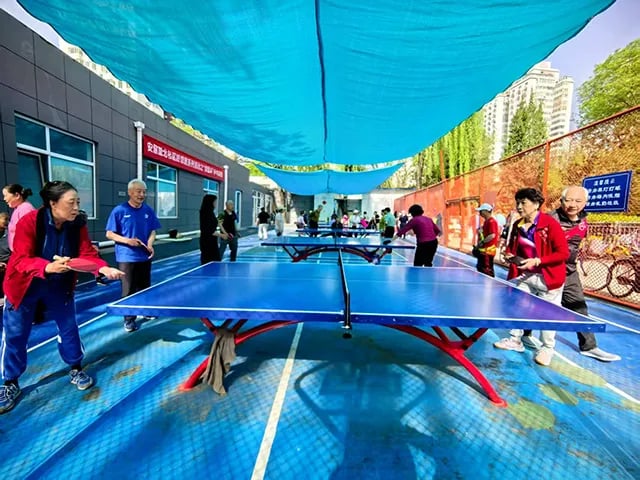
Table tennis appears deceptively repetitive: serve, return, recover, repeat. Yet each rally requires continuous recalculation because ball speed, spin and placement are externally determined. A 2024 Chinese study used that open-skill demand to ask whether years of table tennis experience are associated with distinctive motor inhibition and sensorimotor connectivity in older adults. [1][2]
The final sample comprised 29 experienced table-tennis players, 31 participants with fit-aerobics experience and 31 controls without comparable exercise experience. The exercise groups were similar in years of practice and overall physical activity, allowing the researchers to compare an open-skill activity with a more predictable closed-skill one. [1]
Motor inhibition was assessed with a stop-signal paradigm. Participants sometimes had to cancel a prepared response after a stop cue appeared. The table-tennis group showed shorter stop-signal reaction times and advantages in reaction speed and accuracy, indicating stronger behavioral performance on reactive control. [1]
The neurophysiological part used paired-pulse transcranial magnetic stimulation to probe connections from the pre-supplementary motor area to primary motor cortex and from the dorsolateral prefrontal cortex to primary motor cortex. These pathways contribute to preparing, regulating and inhibiting movement. [1][3]
Regulatory efficiency in the pre-SMA–M1 pathway was highest in the table-tennis group, and relationships between neural regulation and stop-signal performance were particularly evident among those participants. The authors also reported more stable inhibitory regulation involving DLPFC–M1. [1]
The interpretation is plausible: an open-skill sport repeatedly demands rapid response selection and cancellation under changing external conditions. Years of those demands could shape the neural systems involved in reactive control. But plausibility should not be mistaken for causality.
The study was cross-sectional, which means participants brought their pre-existing histories, preferences and abilities into the laboratory. People with stronger motor control may be more likely to continue playing table tennis, or unmeasured lifestyle differences may contribute to both exercise choice and performance. The authors explicitly identify this limitation and call for longitudinal research. [1]
The findings are therefore best treated as a mechanistic clue rather than a prescription. They connect a particular kind of sport experience with measurable behavioral and cortical differences, but they do not establish table tennis as a treatment for age-related decline.
What makes the study valuable is its more precise question. Instead of asking whether exercise is generally 'good for the brain,' it asks whether the informational demands of an activity matter. That distinction could eventually help researchers design exercise programs around the kind of control a person needs to preserve.
Discussion Questions
- How might the open-skill demands of table tennis influence motor inhibition differently from closed-skill exercise?
- What does the stop-signal paradigm capture that a simple reaction-time test may miss?
- How much confidence should we place in sensorimotor connectivity differences from a cross-sectional study?
- What alternative explanations could produce the same behavioral findings?
- When does a mechanistic clue become strong enough to guide exercise recommendations for older adults?
References
- Wei et al., "Table tennis experience enhances motor control in older adults: Insights into sensorimotor-related cortical connectivity." Source
- PubMed, "Table tennis experience enhances motor control in older adults: Insights into sensorimotor-related cortical connectivity." Source
- International Journal of Clinical and Health Psychology, "Table tennis experience enhances motor control in older adults." Source
Finished reading? Mark this lesson as done.