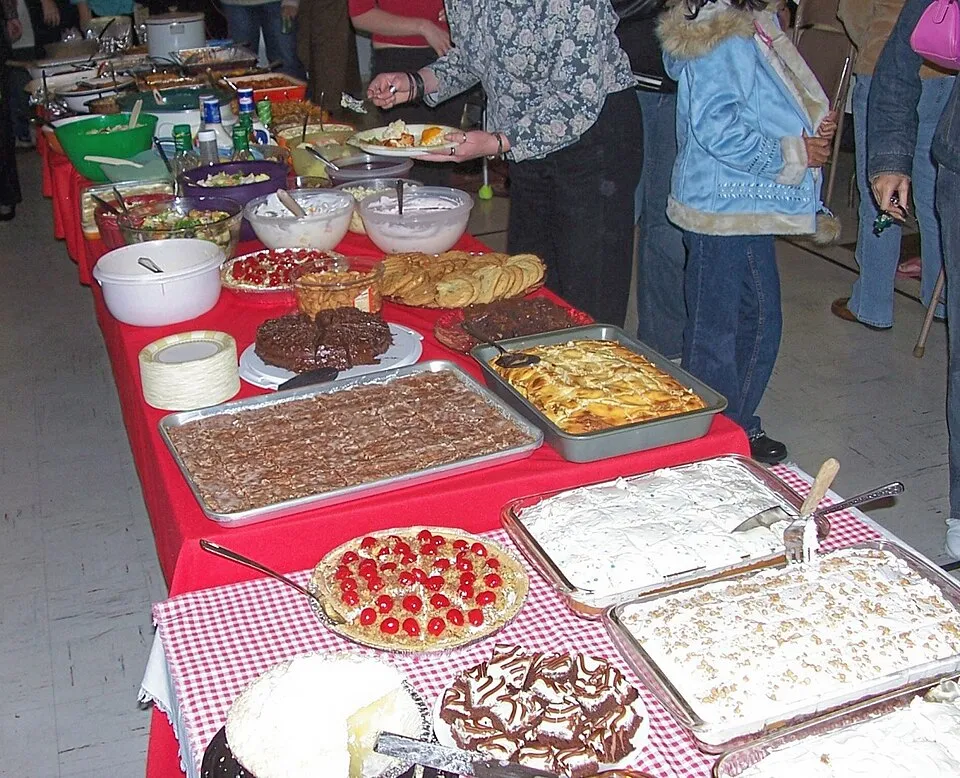
The American Potluck: Sharing the Table and the Work
Key Vocabulary
a meal or gathering where different people bring food to share
Our office is having a potluck on Friday.
a meal eaten together and often prepared or provided by several people
A shared meal can make a community event feel welcoming.
the person who organizes or welcomes people to an event
The host provided drinks and plates.
to give something as part of a group effort
Each guest can contribute one dish.
food designed to be quick or easy to prepare
Some 1950s potluck recipes used convenience food.
Article
A potluck has one simple rule: instead of one person cooking everything, several guests bring food to share. One person may arrive with pasta, another with salad, someone else with dessert, and suddenly the table has a meal that no single cook planned.
This shared meal is common at many American churches, workplaces, schools, clubs and neighborhood gatherings. The host usually provides the place and sometimes a main dish, while guests contribute something of their own. The result can be organized carefully or pleasantly unpredictable.
Smithsonian food-history projects show how potluck cooking also reflected wider American food trends. When museum staff recreated a 1950s potluck from period cookbooks, they found recipes that used canned soup, packaged ingredients and other convenience food that became important in postwar kitchens. [1]
A later Smithsonian experiment with a 1960s potluck focused on make-ahead dishes. Convenience cooking could reduce the amount of work happening during the party itself, giving the host more time with guests. [2]
The social idea is as important as the recipes. To contribute food is to take responsibility for a small part of the event. People can bring a family favorite, try something new or choose the easiest dish that fits their time and budget.
Potlucks remain useful because they spread both cost and work. The Smithsonian's modern list of civic activities even suggests a community potluck as one way to bring people of different generations together. [3]
The best potluck tables rarely look perfectly planned. Their appeal comes from variety and participation: a meal made from many small decisions, with enough room for one more plate.
Discussion Questions
- What dish would you contribute to a potluck, and why?
- What are the advantages of a shared meal compared with one person cooking everything?
- How should a host organize food when guests have allergies or different diets?
- What foods from your country would work especially well at a potluck?
- Why can eating together help people from different age groups or backgrounds connect?
References
- Smithsonian National Museum of American History, "Postwar potluck: Grilling out, convenience cooking, and other 1950s food trends." Source
- Smithsonian National Museum of American History, "More time for the party: A 1960s make-ahead potluck." Source
- Smithsonian National Museum of American History, "100 Civic Actions." Source
Finished reading? Mark this lesson as done.