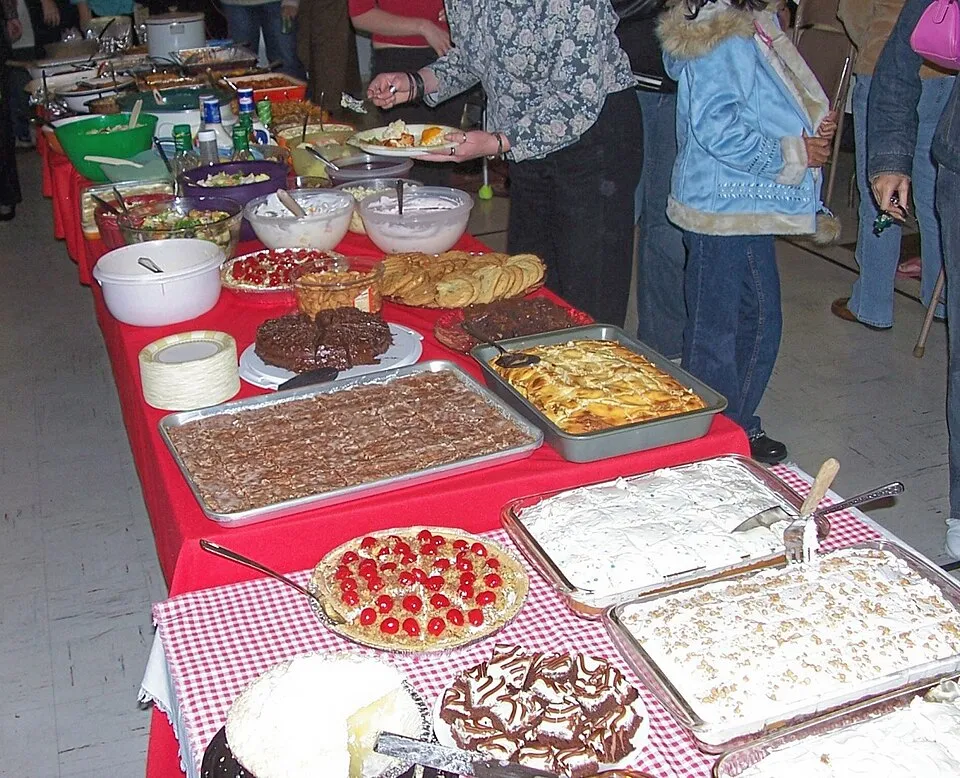
The Potluck Table: Cooperation in American Food Culture
Key Vocabulary
a meal shared by a group or community
A communal meal can create informal conversation between strangers.
the person responsible for welcoming people or organizing an event
The host did not need to prepare every dish.
something given as one part of a larger shared effort
Each contribution changed the final menu.
preparing food with methods or products designed to save time and effort
Postwar cookbooks often promoted convenience cooking.
a repeated social practice that carries shared meaning
Bringing a dish can become part of the social ritual of a potluck.
Article
A potluck solves a social problem through distributed effort. Instead of asking one host to finance and prepare an entire communal meal, guests make individual contributions that assemble into a table no single person fully controls. The mild uncertainty is part of the format: three desserts may appear, while nobody remembers bread.
In the United States, potlucks have long appeared in churches, workplaces, clubs and neighborhood gatherings. They are flexible enough for a carefully coordinated dinner or a loose instruction to bring something to share. The structure turns hospitality from a one-way service into collective participation.
Smithsonian food-history experiments reveal how the potluck also absorbed changing ideas about domestic work. In recreating a 1950s meal from period cookbooks, museum staff encountered convenience cooking built around canned soup, packaged ingredients and recipes designed for a postwar kitchen. [1]
A later experiment with 1960s recipes emphasized make-ahead food. Preparing dishes before guests arrived promised the host more time at the party and less time in the kitchen, reflecting a broader desire to make entertaining easier to manage. [2]
The social ritual can communicate more than efficiency. A contribution may carry family history, regional identity or personal taste. At an international workplace potluck, a dish can even become an informal introduction to someone's background without requiring a formal cultural presentation.
There are practical limits. Allergies, religious rules and dietary preferences make completely unplanned communal meals harder to manage, and expectations about homemade food can create pressure for people with little time. Clear labels and loose coordination can keep the format welcoming.
The potluck endures because its imperfection is productive. A communal meal assembled by many hands creates small opportunities for conversation: Who made this? What is in it? Can I have the recipe? The Smithsonian's civic-action project even presents a community potluck as a tool for intergenerational connection. [3]
Discussion Questions
- Does shared responsibility make hospitality more inclusive, or can it simply move pressure from the host to guests?
- How do food allergies and dietary rules change the traditional idea of an unplanned potluck?
- What can communal meals accomplish that formal meetings often cannot?
- How has convenience cooking changed the meaning of homemade food in your culture?
- What dish would best represent your family or region at an international potluck, and what story would it tell?
References
- Smithsonian National Museum of American History, "Postwar potluck: Grilling out, convenience cooking, and other 1950s food trends." Source
- Smithsonian National Museum of American History, "More time for the party: A 1960s make-ahead potluck." Source
- Smithsonian National Museum of American History, "100 Civic Actions." Source
Finished reading? Mark this lesson as done.