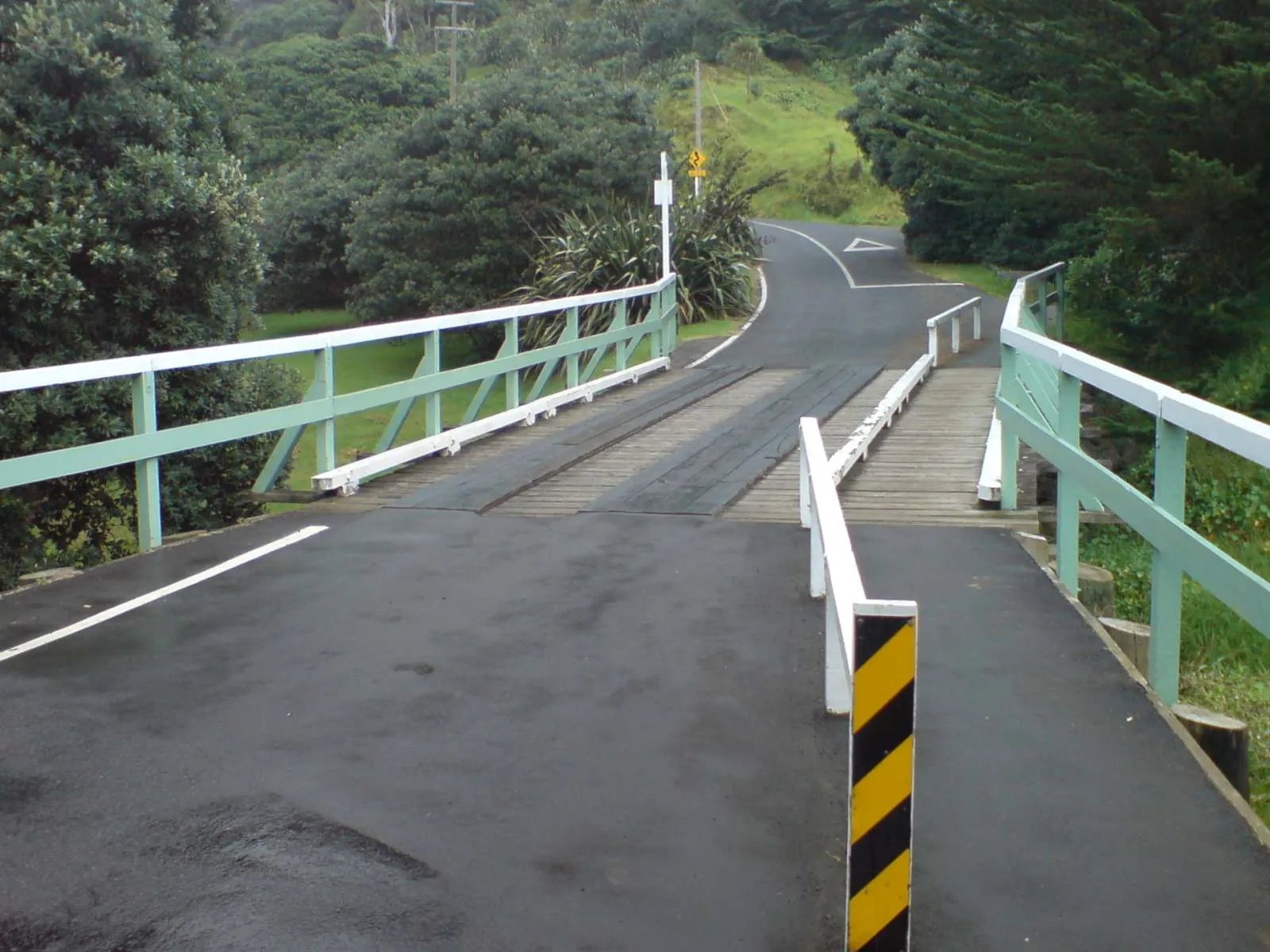
Who Goes First? New Zealand's One-Lane Bridge Rules
Created by Brando Oxley · 22 Aug 2026
Key Vocabulary
the right to go before another road user
The sign shows which direction has priority.
vehicles moving toward you from the opposite direction
Check for oncoming traffic before entering the bridge.
a system of signs that gives directions or information
Clear signage helps unfamiliar drivers.
a narrow or busy point that slows the movement of traffic
The old bridge became a bottleneck in holiday periods.
to allow another road user to go first
Some drivers must give way before crossing.
Article
A road trip through New Zealand can suddenly present a small test of attention: a bridge wide enough for traffic in only one direction. One-lane bridges remain part of the road network, particularly on routes where older infrastructure meets lower traffic volumes. [1][2]
The basic system is based on priority. Signs before the bridge tell drivers which direction must give way. A red-bordered sign means you must allow oncoming traffic to cross first, while a blue rectangular sign indicates that the other direction should give way to you. [1]
That does not mean priority gives a driver permission to charge ahead. NZ Transport Agency guidance tells drivers to slow down and check whether another vehicle is already on the bridge before crossing. [1]
Good signage matters because visitors may not be familiar with the system. At the former Kāeo one-lane bridge in Northland, NZTA specifically noted that many travelers did not understand the need to give way. The bridge also became a bottleneck during busy visitor periods and was eventually replaced by a two-lane bridge. [3]
One-lane bridges can make sense where traffic levels are low, but their operation depends heavily on driver cooperation. Two vehicles cannot solve a disagreement by squeezing past each other in the middle.
They also create a small social moment in driving. Someone has priority, someone waits, and both drivers have to read the same road situation correctly. A wave from the person who crosses first is optional, but it often feels appropriate.
For international visitors, the safest approach is simple: treat the signage as part of the journey rather than an obstacle to it. A few seconds of patience can prevent a very awkward meeting in the center of a narrow bridge.
Discussion Questions
- What makes road signage easy for international visitors to understand?
- How should drivers behave when they have priority but another car is already crossing?
- When is a one-lane bridge a reasonable solution, and when does it become a bottleneck?
- What road rules in your country are often confusing for visitors?
- Why can a simple give way rule depend as much on cooperation as on law?
References
Finished reading? Mark this lesson as done.