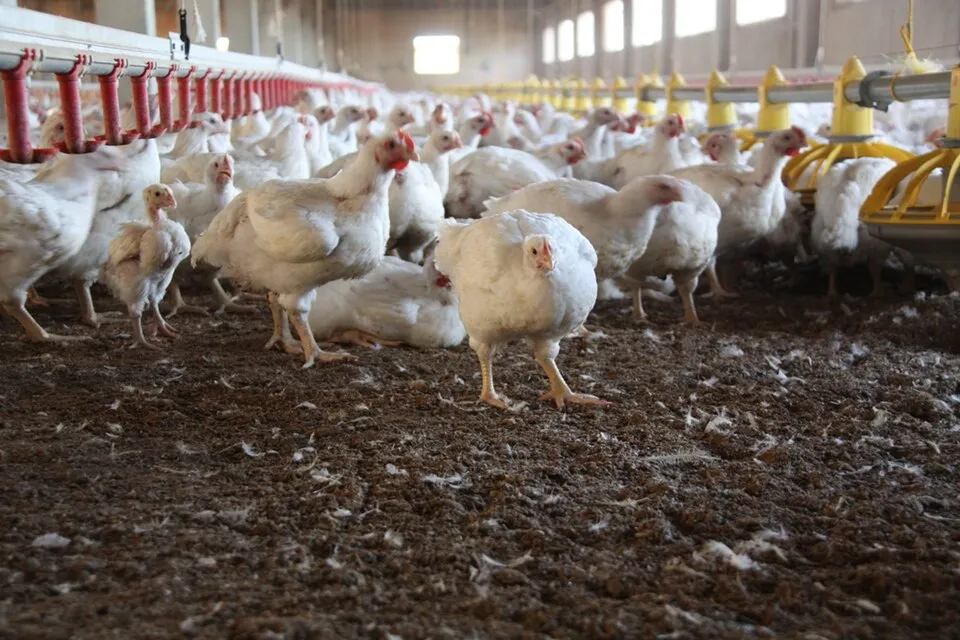
Could Gut Chemistry Help Chickens Fight Infection?
Key Vocabulary
a cell that helps protect the body from disease
The researchers studied a type of chicken immune cell.
still growing or changing toward a mature form
The treatment worked on developing cells.
to bring something into contact with another substance or condition
Scientists exposed the cells to sodium butyrate.
an illness caused when harmful microbes enter the body
Better immune defenses may help animals fight infection.
a situation in which someone relies strongly on something
Researchers hope to reduce dependence on antibiotics.
Article
A natural molecule produced by gut bacteria may help chicken immune cells fight dangerous bacteria more effectively. University of Bristol-led research published on August 12 studied a substance called sodium butyrate. [1][2]
The researchers focused on macrophages. These immune cells help the body find and destroy invading microbes.
When developing chicken macrophages were exposed to sodium butyrate, they later became better at killing several kinds of bacteria, including E. coli and Salmonella. [1]
The effect depended on timing. The molecule changed cells while they were still developing, but it did not improve fully mature macrophages in the same way. [2]
Researchers found that the treated cells produced more reactive oxygen species and used a process called autophagy. Both can help cells attack and remove harmful bacteria.
The study has an important limitation: it tested cells in a laboratory. It does not yet show that sodium butyrate can prevent disease when given to chickens on real farms.
Scientists are interested because better disease prevention could reduce some dependence on antibiotics. [3] The next challenge is to learn whether this unusual immune effect can work safely and reliably in living animals.
Discussion Questions
- Why is reducing unnecessary antibiotic use important for both animals and people?
- What is the difference between a promising laboratory result and a proven treatment?
- How should farms prevent disease before animals become sick?
- What benefits could come from using natural processes to strengthen an animal's immune system?
- What questions should researchers answer before testing this approach on large groups of chickens?
References
- University of Bristol, "Immune 'reprogramming' could protect poultry from deadly diseases without antibiotics, study finds." Source
- Adams et al., "Innate immune reprogramming of chicken macrophages by sodium butyrate enhances reactive oxygen species-mediated antimicrobial responses in vitro," The Journal of Immunology. Source
- World Health Organization, "Stop using antibiotics in healthy animals to prevent the spread of antibiotic resistance." Source
Finished reading? Mark this lesson as done.