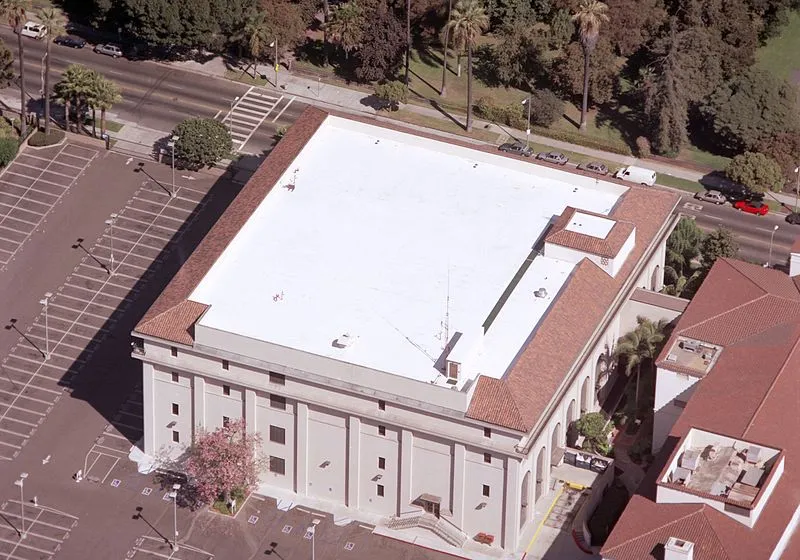
Reflecting the Sun: How Cool Roofs Change Urban Heat
Key Vocabulary
the proportion of incoming light or solar energy that a surface reflects
A white roof usually has a higher albedo than a dark roof.
an urban area that is warmer than nearby less-developed areas
Dark roofs and pavement can strengthen the urban heat-island effect.
the highest amount of energy needed for cooling during a period
Reflective roofs can reduce peak cooling demand on hot afternoons.
a surface layer designed to reflect more sunlight
Workers applied a reflective coating to the old roof.
extra heating energy that may be needed because a surface reflects useful winter sunlight
Cold climates can experience a small winter heating penalty from cool roofs.
Article
A city absorbs an enormous amount of sunlight through roofs, roads and other hard surfaces. Conventional dark roofing can become substantially hotter than the surrounding air, contributing both to uncomfortable buildings and to the wider urban heat-island effect. One deceptively simple response is to make roofs more reflective. [1][2]
A cool roof is designed to absorb less solar energy than conventional roofing. Its effectiveness depends mainly on solar reflectance, or albedo, and on how efficiently the material releases heat it does absorb. [1]
The U.S. Environmental Protection Agency reports that cool roofs can lower maximum indoor temperatures in non-air-conditioned homes by roughly 1.2 to 3.3 degrees Celsius. In air-conditioned residential buildings, increased roof reflectance can also reduce peak cooling demand. [1]
The effect extends beyond individual buildings. When enough roofs and other surfaces remain cooler, they release less heat into the surrounding environment. Cities and states have therefore incorporated cool-roof requirements, rebates or voluntary standards into broader heat and energy programs. [1][2]
The technology is more varied than painting every building white. Reflective coatings, membranes, metal roofs, tiles and specially designed pigments can all increase reflectance. Some products are intended for steep residential roofs, while others work better on large flat commercial buildings. [1]
There are trade-offs. In colder climates, reflecting winter sunlight can slightly increase heating demand, although EPA notes that this penalty is often outweighed by summer savings. Roof condition, insulation, local climate and maintenance also influence results. [1]
Cool roofs demonstrate how climate adaptation can involve changing ordinary materials rather than constructing dramatic new infrastructure. A roof already has to protect a building from weather; changing how it interacts with sunlight can quietly alter the thermal behavior of both the building and, at sufficient scale, the neighborhood around it.
Discussion Questions
- How should cities decide which buildings or neighborhoods should receive heat-reduction investments first?
- What advantages do simple passive technologies have over solutions that require more electricity?
- Should governments require reflective roofing in very hot cities, or leave the decision to property owners?
- How should planners compare a small benefit on millions of buildings with a large benefit from a few major projects?
- Which surfaces in your own city seem to absorb unnecessary amounts of heat?
References
Finished reading? Mark this lesson as done.