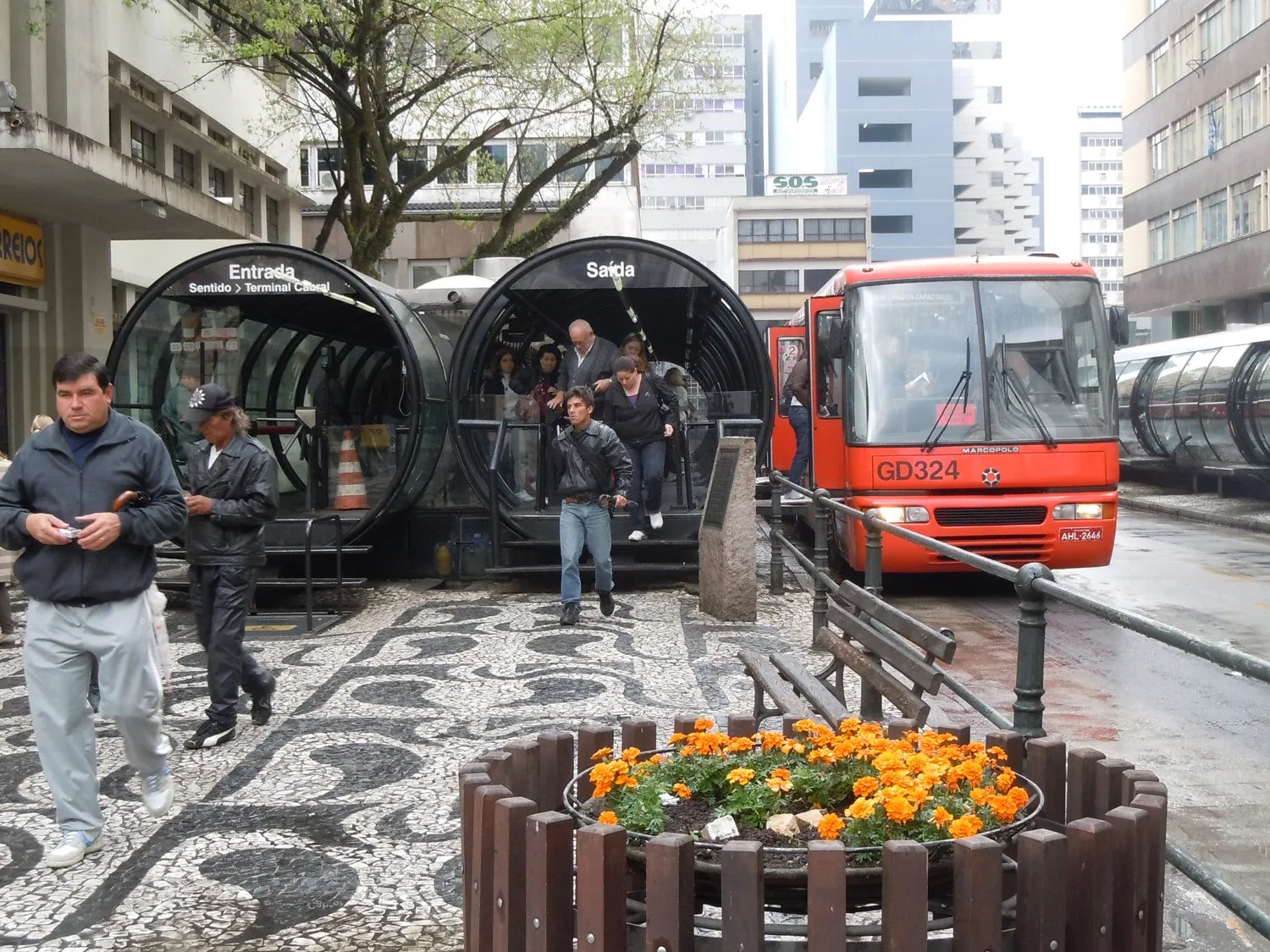
Curitiba's Bus Stops That Look Like Tubes
Created by Brando Oxley · 22 Aug 2026
Key Vocabulary
a long, round bus stop where people wait inside
We waited inside the tube station for our bus.
a raised place where people wait to get on a bus or train
The bus stopped next to the platform.
a part of the road used mainly by buses
The bus moved quickly in the bus lane.
the money you pay for a bus or train trip
I paid the bus fare before the bus came.
to join two or more places or things
These bus lines connect different parts of the city.
Article
Curitiba, a city in Brazil, has a very unusual kind of bus stop. It is called a tube station because it looks like a long glass tube. People wait inside before the bus comes. [1]
The tube station has a raised platform. The platform is close to the same height as the bus floor. This can make it easier for people to step from the station into the bus. [1][3]
Many fast buses use a bus lane. A bus lane is a part of the road for buses, not regular cars. Curitiba started this kind of fast bus system in 1974. It is often called BRT. [2]
People can pay the fare before the bus comes. The fare is the price of the bus trip. They enter the station first and wait. When the bus arrives, several doors can open, so people can get on and off quickly. [3]
The stations also help different bus lines connect. URBS says people can use more than one line with one fare in much of the city system. Curitiba now has more than 337 tube stations. [1]
The stations are still changing. In 2026, people could again pay in the bus system with some phones and watches. [4] The round stations look unusual, but they help a bus trip work more like a fast city train.
Discussion Questions
- What is unusual about the tube station?
- What kind of bus stop do you use in your city?
- Why can a bus lane help buses move faster?
- What is the easiest way to pay a bus fare in your country?
- What places should public transport connect in a city?
References
- URBS Curitiba, "Rede Integrada de Transporte." Source
- Institute for Transportation and Development Policy, "Manual de BRT em Português." Source
- World Bank, "Case Study: Bus Station Design, Curitiba, Brazil." Source
- URBS Curitiba, "Estações-tubo e ônibus voltam a aceitar pagamento por celular e relógios inteligentes." Source
Finished reading? Mark this lesson as done.