Curitiba's Tube Stations: Borrowing Tricks from the Metro
Created by Brando Oxley · 22 Aug 2026
Key Vocabulary
a system in which passengers pay before getting onto the vehicle
Pre-board fare collection can reduce the time a bus spends at a station.
the movement of people through a transport system
Wide doors can improve passenger flow.
boarding where the platform and vehicle floor are at almost the same height
Level boarding can make entry faster and more accessible.
a transport system in which different routes and services are connected
An integrated network makes changing buses easier.
systems used to move people around a city
Good urban transport can reduce the need to drive.
Article
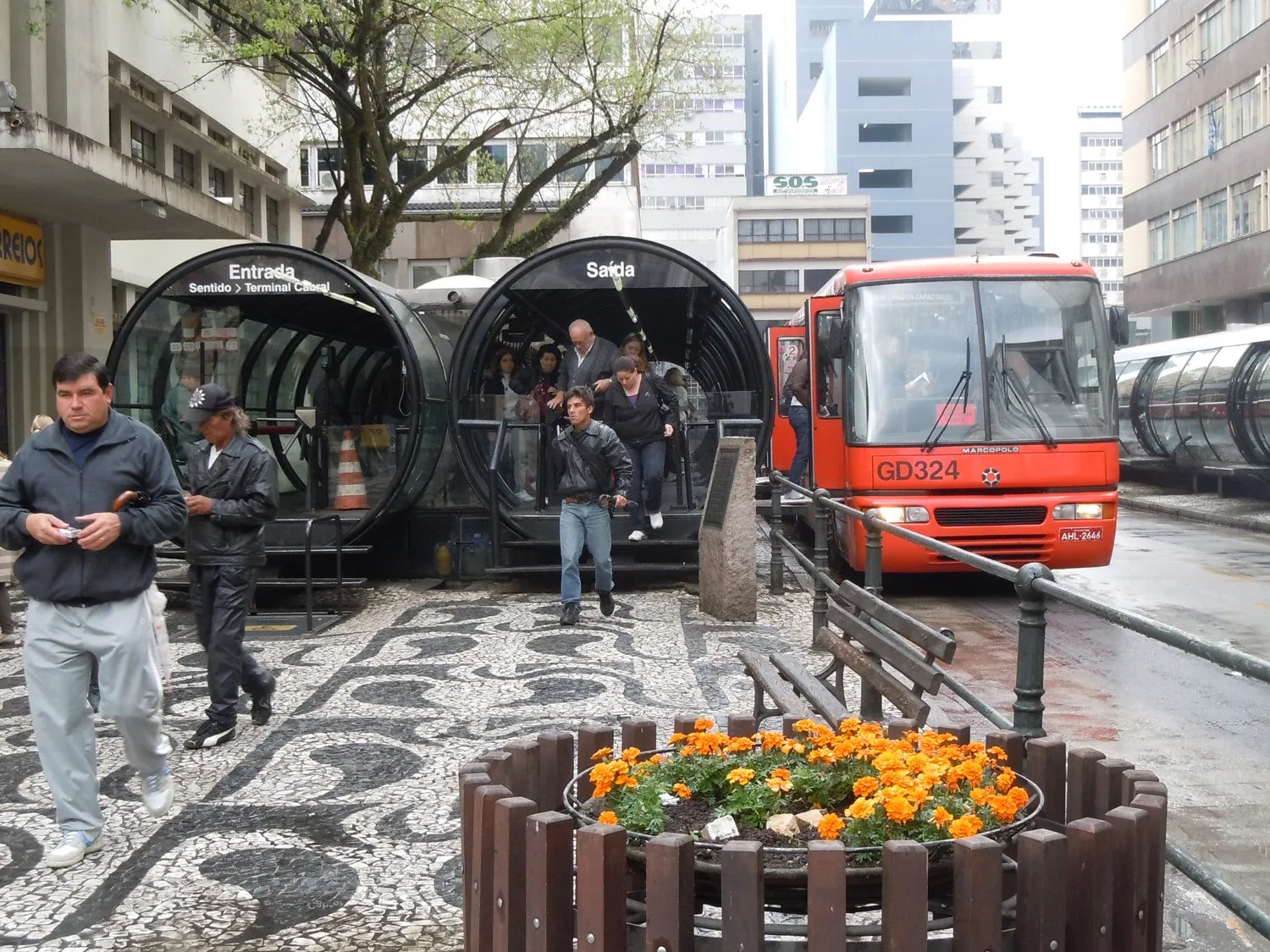
Curitiba's bus stops sometimes look as if a subway carriage has been parked on the sidewalk. The city's famous tube stations are long, rounded shelters where passengers enter before the bus arrives, wait on a raised platform and board at nearly the same level as the bus floor. [1][3]
The design belongs to Curitiba's wider bus rapid transit system, or BRT. ITDP traces the city's complete BRT model to 1974, when planners began using buses in dedicated corridors as a lower-cost way to move large numbers of people quickly. [2]
The tube station changes one of the slowest parts of ordinary bus travel: boarding. Instead of paying after stepping onto the bus, passengers can pass through the station first. This is a form of pre-board fare collection. World Bank material on Curitiba describes fare payment at the station turnstile and raised platforms that line up with bus doors. [3]
That combination supports faster passenger flow. Several people can leave and enter through different doors without forming one long line at the front. Level boarding can also make the physical step between station and vehicle smaller, which is useful for passengers carrying bags or moving less easily. [1][3]
Curitiba's integrated network adds another layer. URBS says a passenger can use more than one bus line while paying a single fare through the city's integration system. In 2026, the network includes more than 337 tube stations as well as 22 terminals. [1]
The stations have also kept changing. Curitiba has tested newer station models, solar technology and contactless payment. In March 2026, URBS said mobile-phone and smartwatch payments had returned across the bus system and tube stations. The basic tube shape remains one of the city's most recognizable pieces of urban transport. [1][4]
The clever part is that the tube does not make a bus into a train. It simply borrows some train-station ideas—pay first, wait on a platform, board quickly—and applies them to buses. A small piece of architecture changes how the whole trip feels.
Discussion Questions
- Which part of Curitiba's tube-station design has the greatest effect on passenger flow?
- Why can pre-board fare collection make a bus system behave more like a metro system?
- How important is level boarding when designing public transport for a wide range of passengers?
- What makes an integrated network more useful than several independent bus routes?
- Which simple design change could improve urban transport in your city?
References
- URBS Curitiba, "Rede Integrada de Transporte." Source
- Institute for Transportation and Development Policy, "Manual de BRT em Português." Source
- World Bank, "Case Study: Bus Station Design, Curitiba, Brazil." Source
- URBS Curitiba, "Estações-tubo e ônibus voltam a aceitar pagamento por celular e relógios inteligentes." Source
Finished reading? Mark this lesson as done.