Step Into the Tube: Curitiba's Unusual Bus Stops
Created by Brando Oxley · 22 Aug 2026
Key Vocabulary
a bus system designed to move people quickly, often using special lanes and stations
Curitiba is famous for its BRT system.
road lanes kept mainly for a particular type of traffic
Buses can avoid some traffic by using dedicated lanes.
getting onto a bus from a platform close to the same height as the bus floor
Platform-level boarding can make getting on the bus easier.
the price paid for a journey on public transport
Passengers pay the fare before entering the bus.
a transport system in which different routes work together
The integrated network allows passengers to change bus lines.
Article
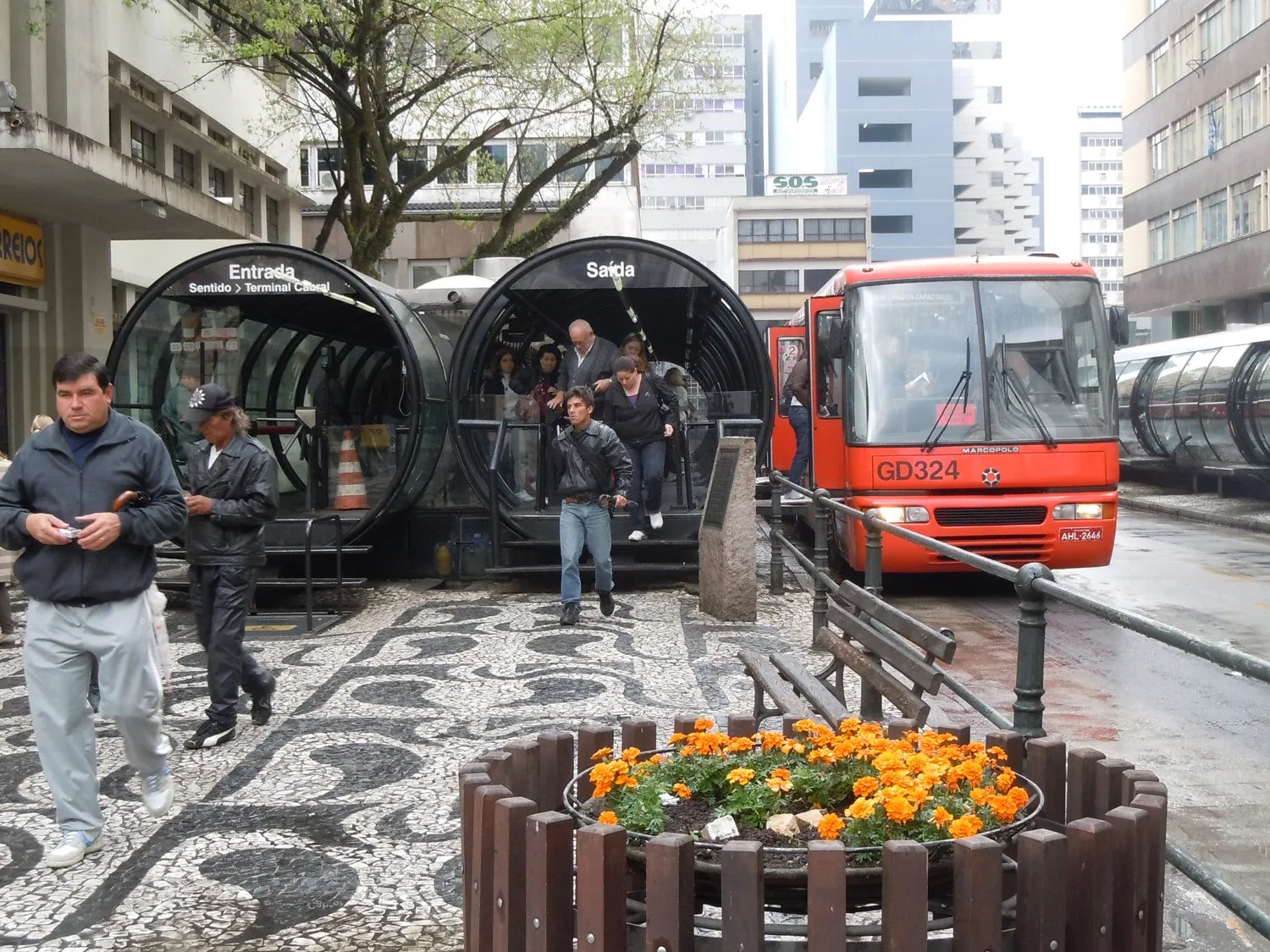
In Curitiba, Brazil, waiting for a bus can feel a little like entering a small train station. The city's famous tube station is a long, rounded shelter with doors, a raised platform and space for passengers to wait before the bus arrives. [1][3]
The stations are part of Curitiba's BRT, or bus rapid transit, system. ITDP says Curitiba developed a complete BRT model in 1974, using buses on dedicated lanes to move large numbers of people more efficiently. [2]
A key idea is platform-level boarding. The station platform is close to the height of the bus floor, so passengers do not have to climb the usual steps from the street. This can make boarding faster and easier. [1][3]
Passengers can also pay the fare before they enter the bus. World Bank material describes payment at the station turnstile, with people waiting inside until their bus arrives. That means the driver does not need to wait while each passenger pays at the front door. [3]
The tube stations are part of an integrated network. URBS says passengers can change between different bus lines through the city's integration system without paying a new fare in many cases. In 2026, the network had more than 337 tube stations and 22 terminals. [1]
The system keeps adding new technology. Curitiba has tested solar stations and other new station designs. In March 2026, URBS also brought back payment by compatible phones and smartwatches across buses and tube stations. [1][4]
The tube station is a good example of a simple idea changing the experience of public transport. It does not turn a bus into a subway, but it borrows useful subway ideas: pay before boarding, wait on a platform and let several doors open at once.
Discussion Questions
- What part of Curitiba's BRT system seems most useful to you?
- How can dedicated lanes improve a bus journey?
- What advantages can platform-level boarding have for passengers?
- Is paying the fare before entering the bus better than paying the driver? Why?
- How well integrated is the public transport network where you live?
References
- URBS Curitiba, "Rede Integrada de Transporte." Source
- Institute for Transportation and Development Policy, "Manual de BRT em Português." Source
- World Bank, "Case Study: Bus Station Design, Curitiba, Brazil." Source
- URBS Curitiba, "Estações-tubo e ônibus voltam a aceitar pagamento por celular e relógios inteligentes." Source
Finished reading? Mark this lesson as done.