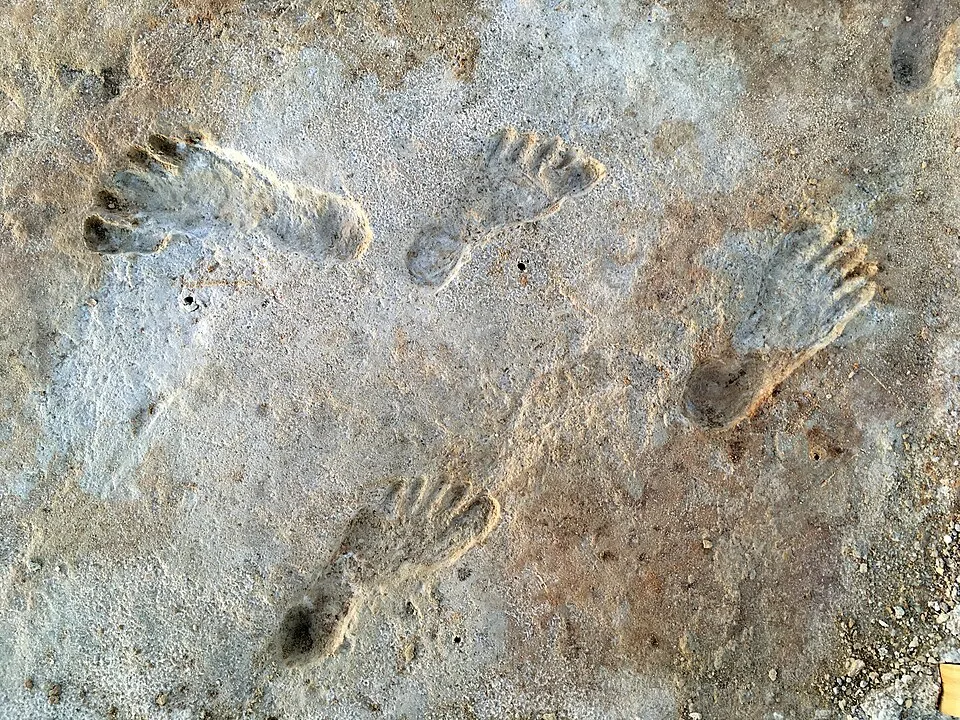
Footprints from Ice Age New Mexico
Key Vocabulary
a mark made by a foot on the ground
Scientists studied an ancient footprint.
a long cold period when large parts of Earth were covered by ice
People lived in the area during the Ice Age.
information that helps show whether an idea is true
The footprints are evidence that humans were there.
very small powder made by flowers and plants
Scientists dated old pollen from the site.
very old
The ancient footprints are thousands of years old.
Article
At White Sands in New Mexico, scientists found ancient human footprints. The tracks were made beside an old lake thousands of years ago. [3]
Researchers first reported that some footprints were about 21,000 to 23,000 years old. This was surprising because it suggested people lived in North America during the last Ice Age earlier than many scientists had thought. [1]
Some researchers questioned the first dating method. It used seeds from an aquatic plant, and water chemistry can sometimes make these materials look older than they really are. [1]
Scientists then tested the site in other ways. They dated ancient pollen and used a method that measures when quartz grains were last exposed to sunlight. [1][2]
These two new methods also supported an age of about 21,000 to 23,000 years. The different evidence made the original result much stronger. [1][2]
The footprints are important because they show ordinary moments, not weapons or buildings. People walked across wet ground, and those steps remained long enough to become evidence of a very distant human past.
Discussion Questions
- Why are footprints interesting evidence about people from the past?
- What would you want to know about the people who made these tracks?
- Why should scientists test an important result in more than one way?
- What ancient place in your country would you like to visit?
- How do you think walking through an Ice Age landscape was different from walking there today?
References
Finished reading? Mark this lesson as done.